Summer cooking, but make it lazy

Sometimes, upon returning from vacation, I feel renewed and inspired by dishes sampled abroad. I’m comforted by a reunion with the worn wood of my cutting boards and the feeling of a familiar knife. Recently, we returned from a blissful trip to northern Norway, filled to the brim with midnight sun and the simplest seafood imaginable—fjord shrimps and oysters, marinated herring, nutty bread and brown cheese. I’m sorry to say that none of this transferred to my kitchen. It didn’t help that the skies in New York turned yellow overhead for a few days, before breaking open and sending heavy branches into the back of our car (which is now broken open, too). Also: is it OK to eat salad in the U.S. this summer? My personal conclusion is yes, I will risk it with well-washed greens from the farmer’s market, or otherwise grown nearby.

Our children returned from their summer travels as well, one girl with a tattoo and one, the teen boy, six inches taller with a backpack full of muddy clothes and gear. Eventually, a full house and a trip to the farmers market shocked me back into cooking, but a low-lift summer version that I’m totally OK with. Here are some highlights.

  • Pantry cooking: We always have anchovies, pasta, and probably parsley growing in our planters. Behold pasta with anchovies and parsley!

  • Garbage salads: A perennial favorite in our house; these consist of greens, some kind of leftover grain, chopped vegetables and herbs, sliced chicken or steak (leftover grilled and a little bit charred is best), maybe a cheese or nut, and a good vinaigrette to toss the whole thing together with. Voilà! Garbage salad.

  • Boards can be dinners, too: a World Cup gathering reminded me of this fact. My friend Madeley brought one of her glorious snacking boards, replete with all four food groups and lots of tasty surprises, and after Spain had cleaned up and taken the party to the streets, we found we didn’t need supper.

  • Dips can be dinners, too. This ricotta dip, in particular, does the trick if served with piles of chopped vegetables and torn baguette or, better yet, slices of living bread from ACQ. In winter, a hot artichoke or crab dip would serve the same purpose.

  • Stale bread magic: panzanella is nothing new, but sometimes I have to be reminded of its genius. Sometimes all it takes is leftover baguette and a surplus of tomatoes to do that…or the inspo of Tara’s pan con tomate. Below is a Greek-ish panzanella, which you can make with or without peppers (hi Cece!), add olives or anything else you like; riff on it as you like. Note this one has nary a lettuce in sight ;)
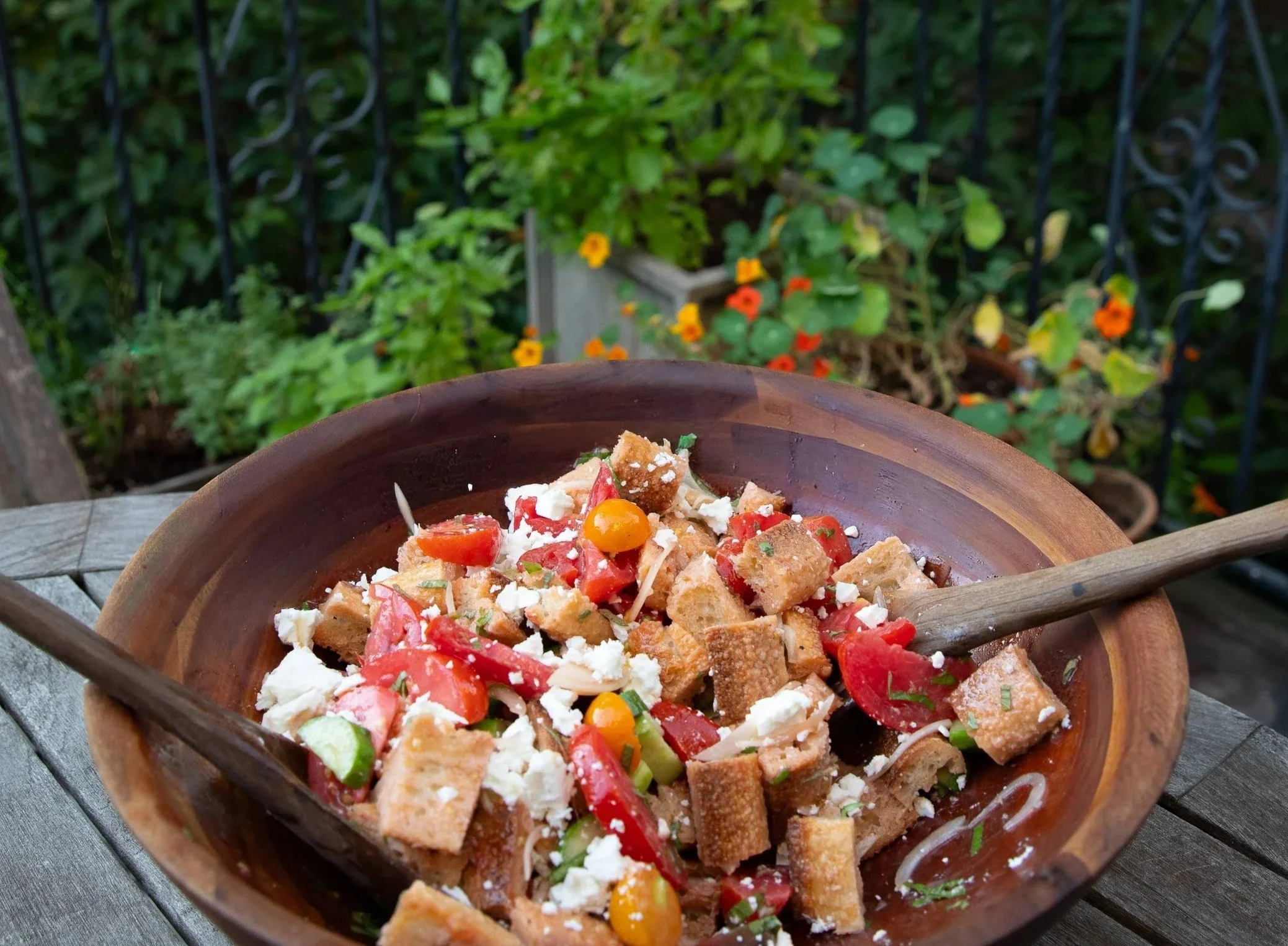
Greekish Panzanella

Serves 4

Ingredients:

  • 2 1/2 cups stale baguette or country-style bread, crusts removed, cut into 1-inch cubes

  • 3 medium tomatoes or the equivalent–cut into wedges then halve the wedges

  • 1/3 cup diced, peeled cucumber

  • Optional: chopped bell peppers and/or kalamata olives

  • 1 small onion or shallot, sliced thin

  • 1/4 cup crumbled feta

  • a few leaves of basil, torn

  • a few mint leaves, minced

    For the vinaigrette: 

  • 1 teaspoon dijon mustard

  • 2 tablespoons red wine vinegar 

  • 1/4 cup extra virgin olive oil 

  • pinch salt

  • freshly ground pepper

Instructions:

In a medium bowl, put the bread cubes, vegetables, a sprinkle of salt, and herbs. Whisk together vinaigrette ingredients then drizzle over the salad ingredients, tossing together to combine. For best results, let this sit for at least an hour while you pull together dinner, then add the feta and toss one last time, adjusting seasoning as needed before serving. If it seems too dry, you can sprinkle a little more vinegar and olive oil over the whole thing.

Below are some photos from our recent trip to Norway’s Lofoten Islands, plus a couple from Stockholm:
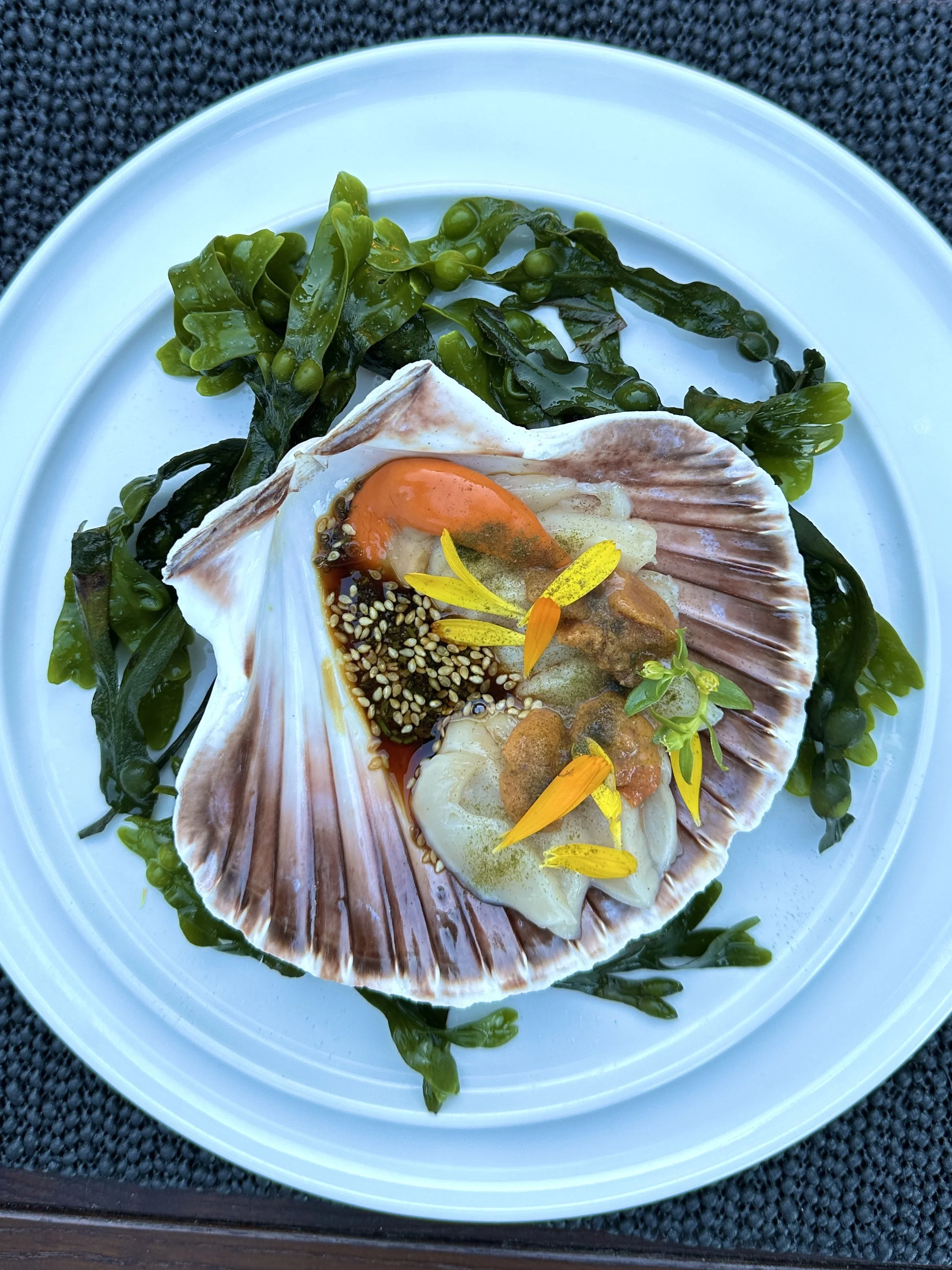

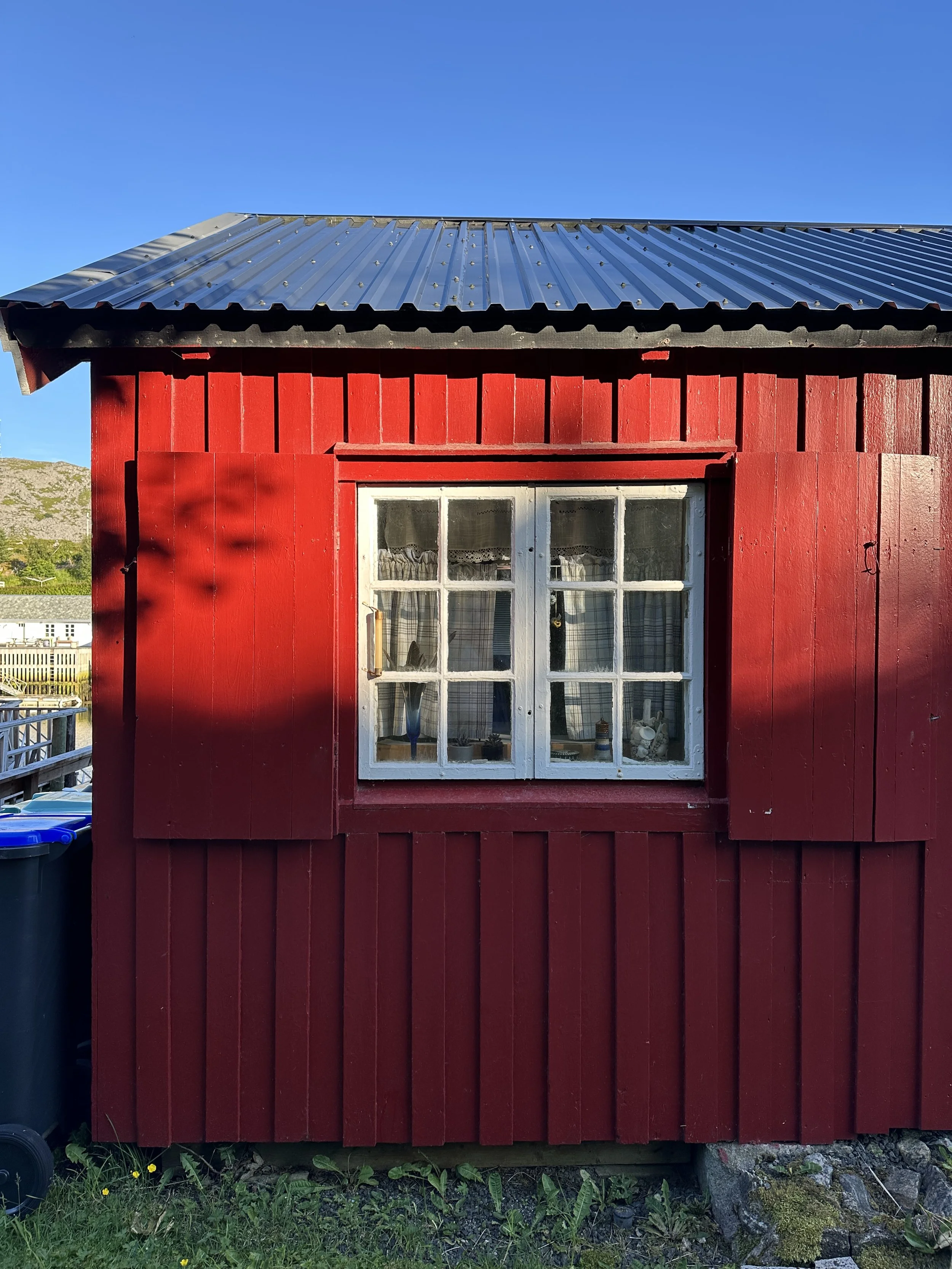
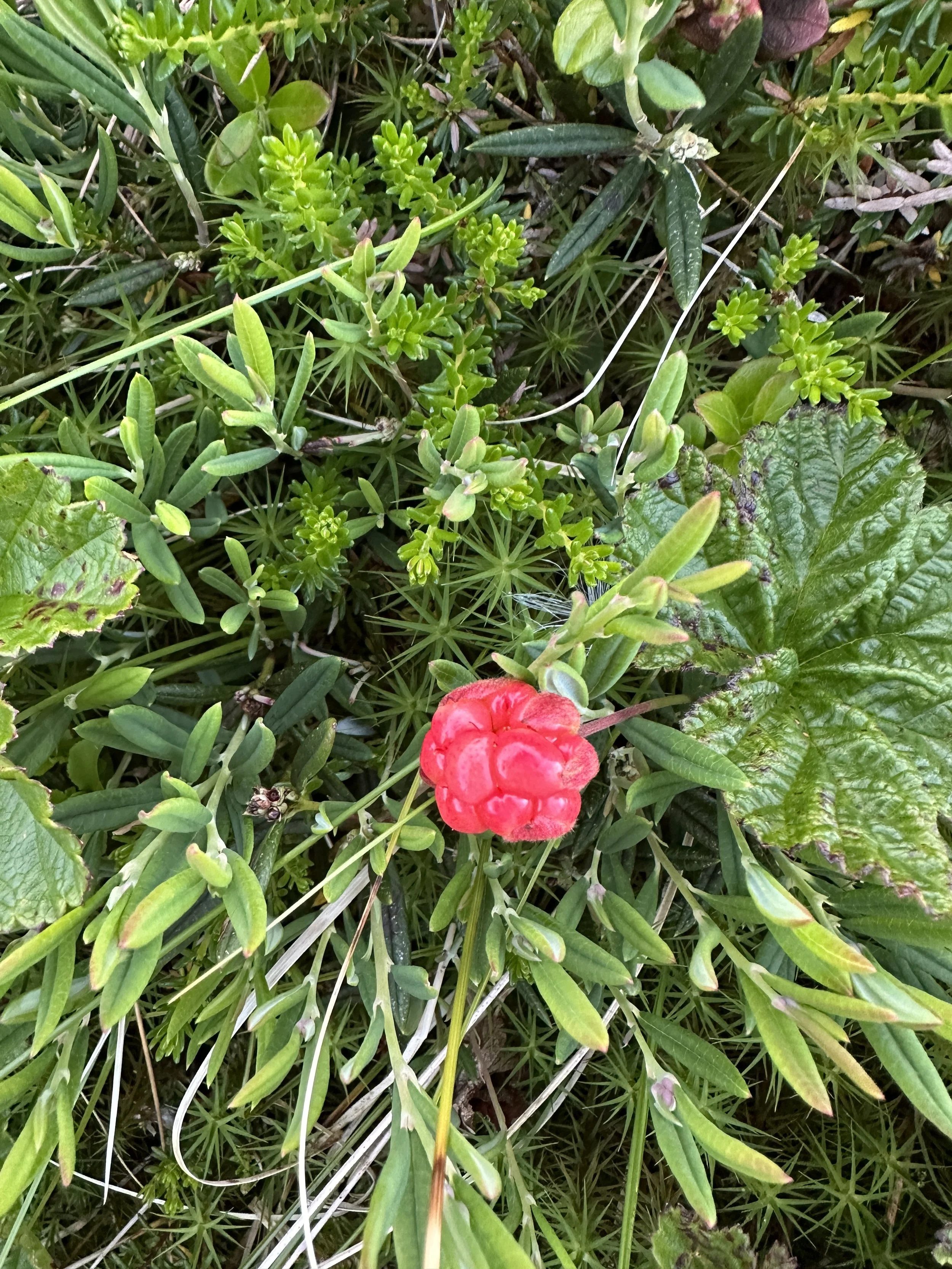
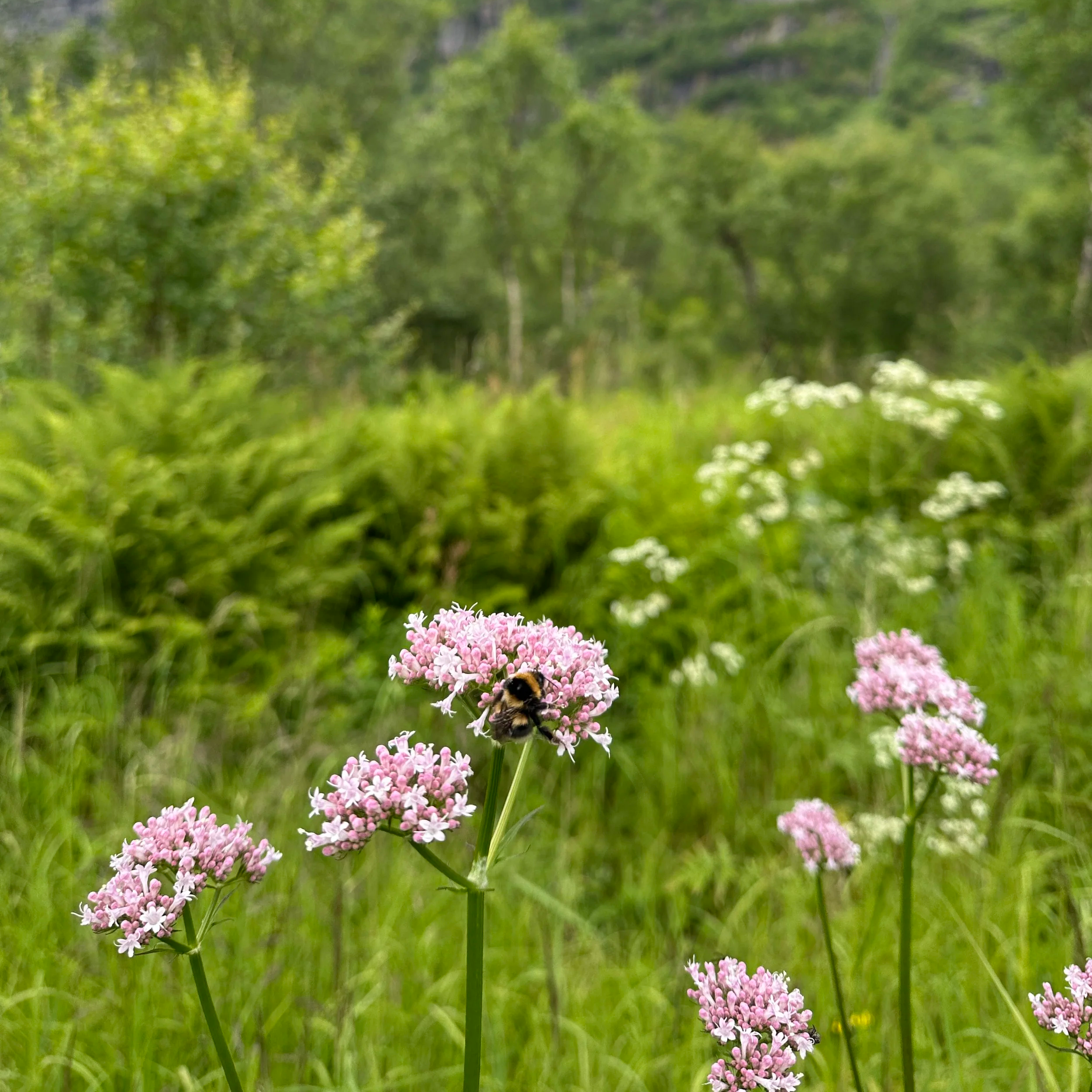
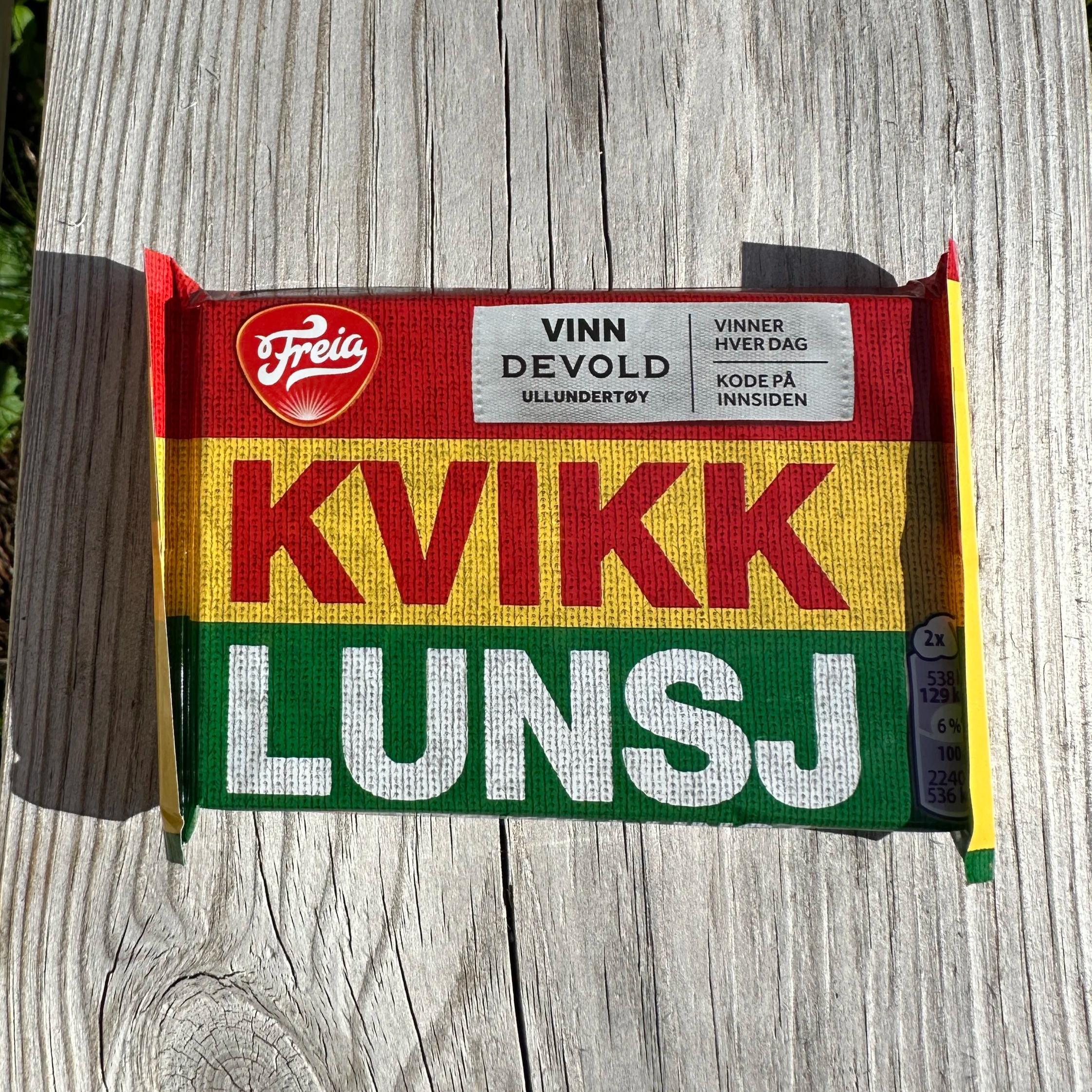
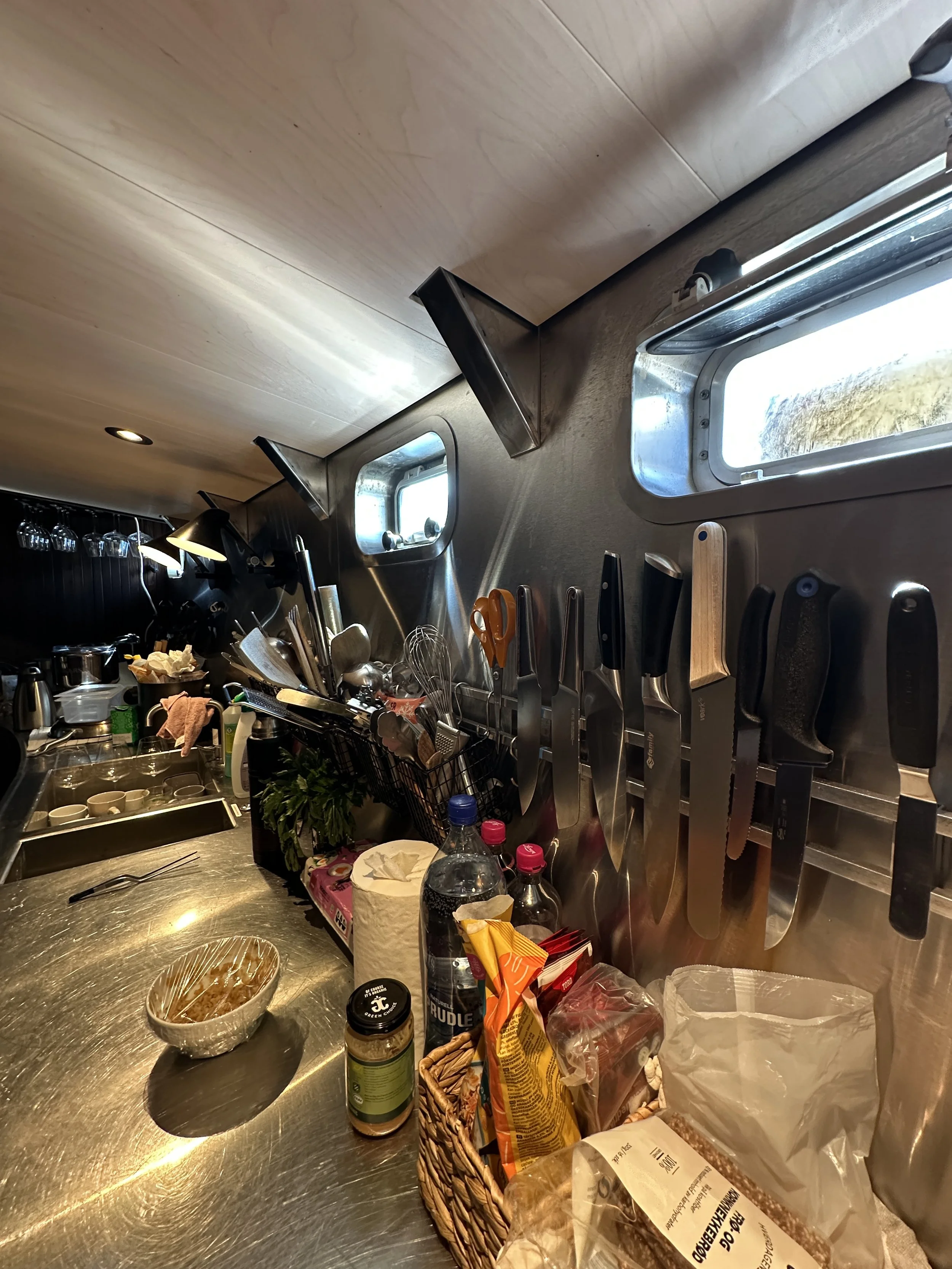
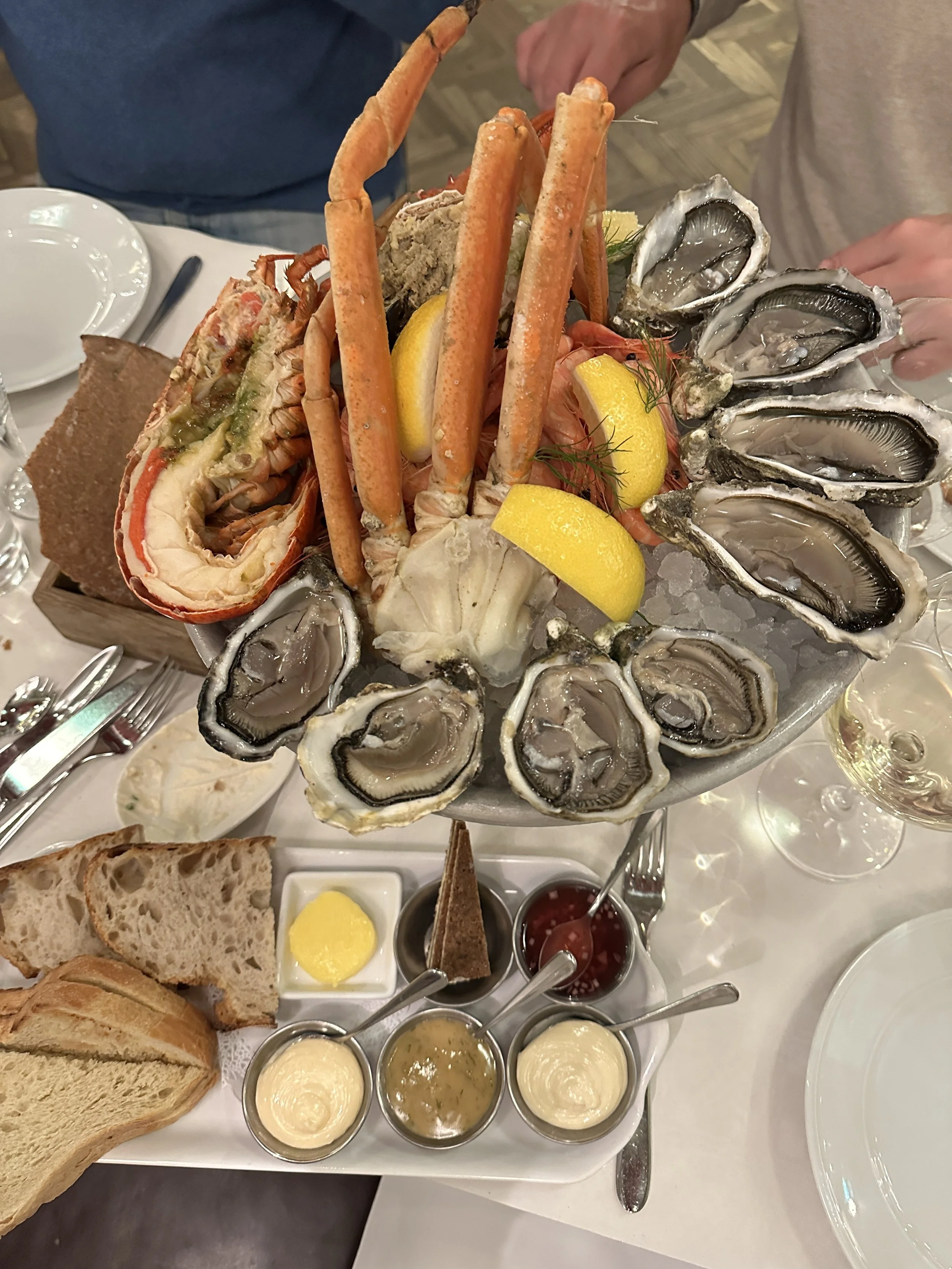
  1. Scallop crudo with uni on the Varg, by our excellent chef Kevin 2. 1 AM sun while hiking 3. Fisherman’s cottage in Skrova 4. Cloudberry 5. View from midnight hike on Skrova 6. The plushest moss 7. Wake-up view from the sailboat 8. Drowsy bee 9. Hikers’ treat 10. Wildlife 11. Lofoten views 12. Cocktails at Godot in Stockholm 13. The galley of the Varg, where magic happens 14. A very good boy portside in Svolvaer 15. Seafood dreams at Sturehof, in Stockholm 16. View from above Trollfjord

Minke whale surfacing quite close to us, as we were dinghying back to the sailboat.
Other Ways

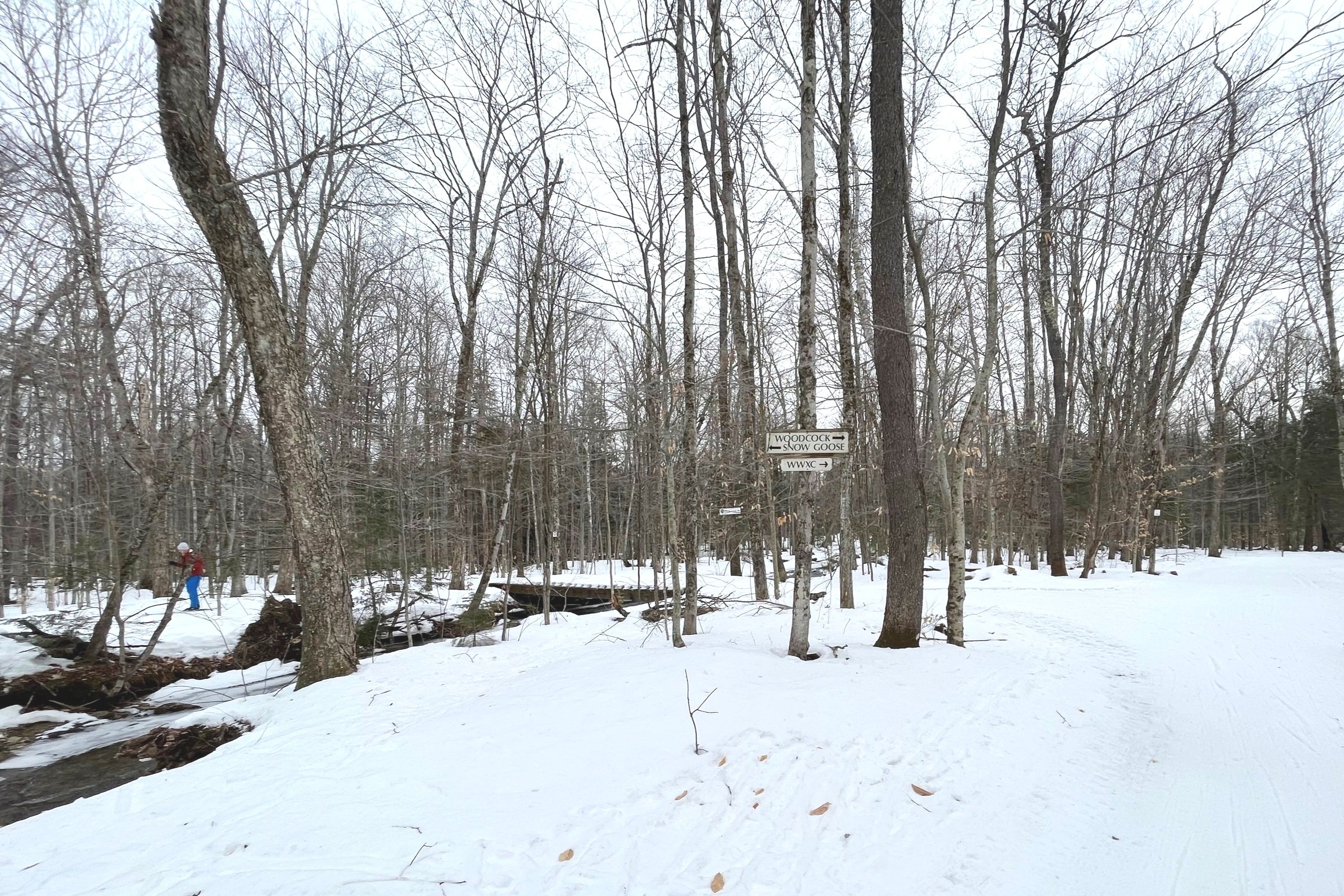
Last weekend we spent some delightfully analog time in Vermont with friends. The snow has been subpar this year, but the ski places were making it work with what they had. The excellent Wild Wings (cross country) center has a simple warming room with a wood stove sporting a little propellor on top like one of those old-fashioned beanies and whirls with the rising heat, dispersing it throughout the room. Equipment rentals and a day ticket come out to a fraction of what a similar arrangement would cost at one of the downhill ski resorts—minus the lift lines—so I’m officially a convert. We worked up a sweat along streams and over bridges on the quiet wooded trails, which had been hand groomed by a shovel-wielding crew (an Instagram post the day before showed them literally moving snow by the shovelful from the woods onto the trails). After a day like that you feel simultaneously beat up and at peace. It’s Vermont at its finest.

The house we’re renting this year might not be everyone’s jam, but it suits our crew just perfectly. The original part was built in the 1920’s I think, and the foundation is constructed around a natural spring, so the first thing you see upon descending into the basement is a boulder with actual spring waters trickling out of it and into a small diversion ditch that leads them gently outside to join a stream that feeds into the larger stream that traverses the property. You would think this setup would breed mold and rot and all sorts of moisture problems, but everyone who goes down to the basement marvels at how the air smells pure and crystalline somehow.

The overall vibe of the house is 1970’s hippie family compound, with homespun paintings and lots and lots of dark wood paneling, and a quirky accumulated library from 100 years of bookworms (1968 Whole Earth Catalog, anyone?). There’s even a harvest gold upholstered Barcalounger, which is highly coveted fireside real estate; as soon as someone leaves it to fetch a drink from the kitchen, there’s always a kid waiting to swoop in and claim the spot. The floors are Vermont soapstone—the deep green of a forest swimming hole and just as chilly. Among the house’s quirks is a perpetual draft, which we counter with chunky sweaters and a dawn-til-dusk fire in the fireplace. Our 10-year-old has taken to getting up in the pre-coffee hours and making the fire himself; we’ll find him seated criss-cross on the hearth, feeding shreds of cardboard into the flames, gazing glassy-eyed into his creation…much preferable to staring at an ipad.

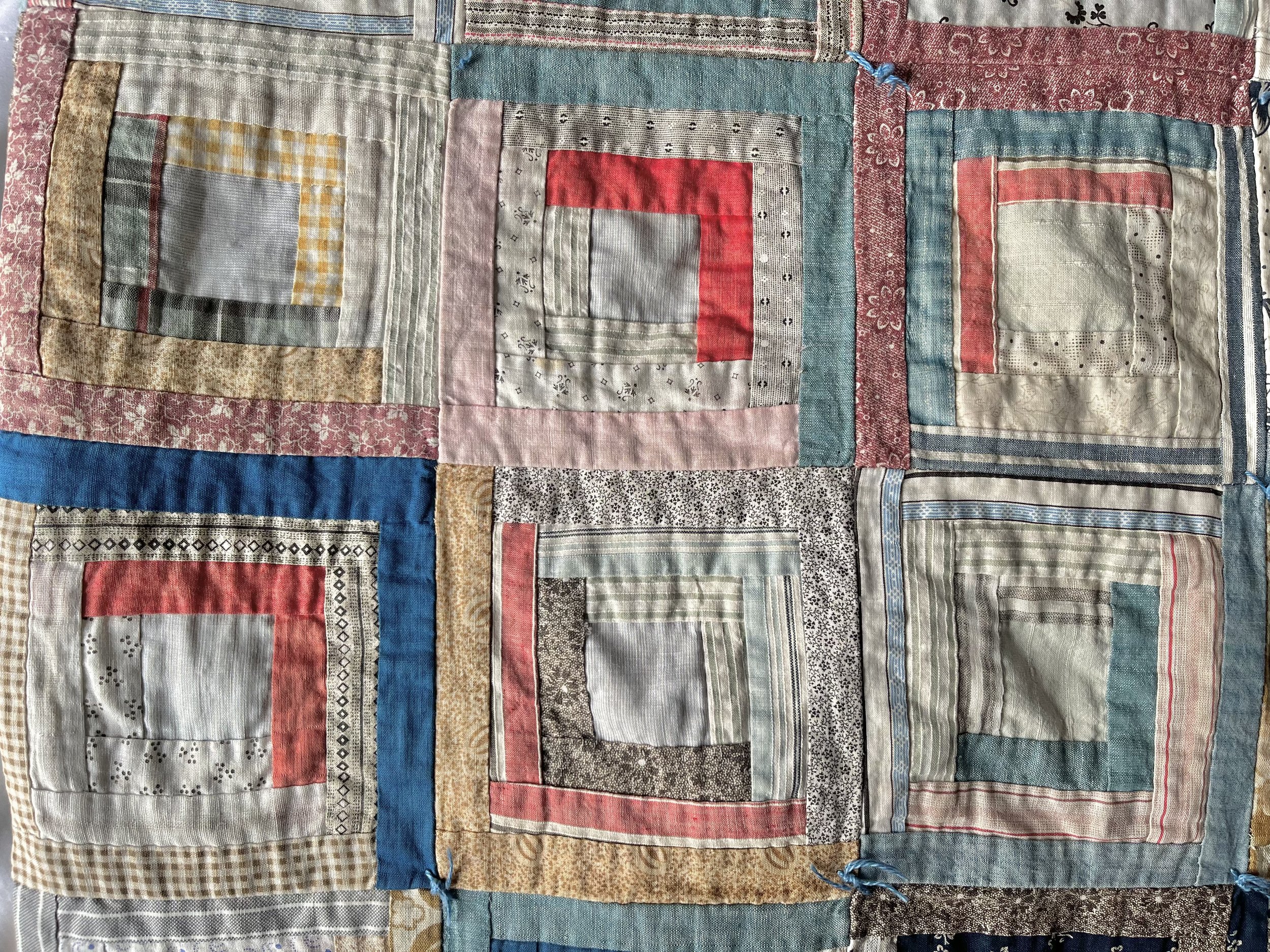
After this weekend, during which we enjoyed outdoor sport and worked an impossible puzzle and ate collaborative meals and slept under ancient quilts, we made the long drive back to the city, where the shock of Manhattan was real—the wall of skyscrapers along the FDR streaked by, brightly lit, looking like futuristic pod dwellings. “What is this strange place we live in?” I thought to myself. The next morning no one in my family wanted to get up, and then we had to walk a block out of our way to avoid the usual film crew that had claimed our street as their own. An alligator was found this week, emaciated and lethargic, floating in our local park’s lake.

Is it time to live another way? To move somewhere quieter and sweet-smelling and more wholesome? Impossible to fathom, though in some branch of the multiverse my kids are fire building and woods roaming on the daily. The community is just too good here and we’re not ready for change. A non-NYC friend recently asked me how we’ve survived this long in the city and I answered: “We’re kind of like prisoners who’ve been incarcerated for a long time and can’t figure out how to move on in the outside world. It’s like Morgan Freeman’s character in Shawshank—We’re institutionalized.”

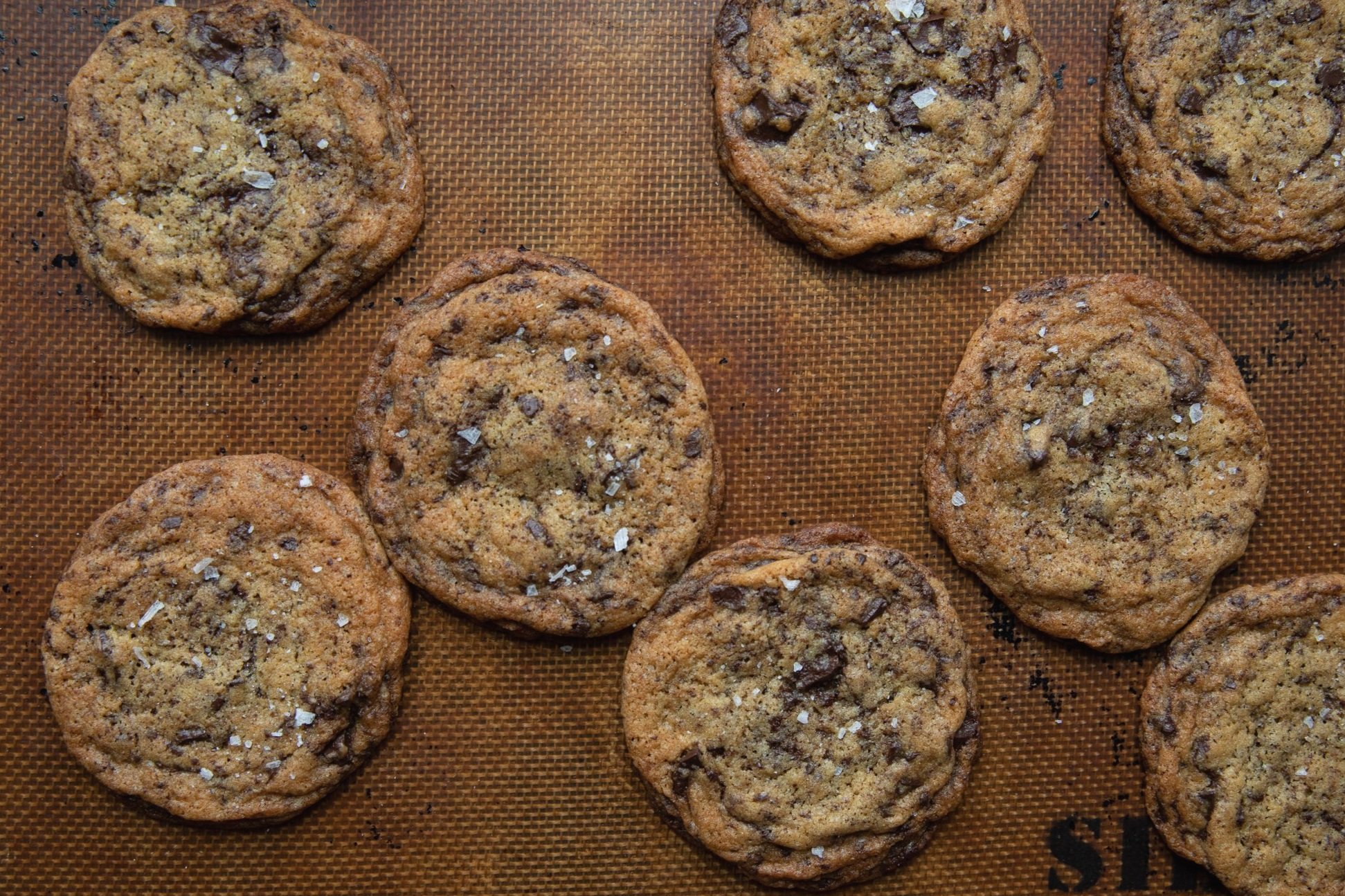
At some point during the weekend a text pinged in from my sister, though when she sent it is unclear as service is blessedly spotty out there. She’d scrawled an excited note about some miso chocolate chip cookies she’d made. She’s more of a savory cook—an excellent one—and mostly only bakes under pressure from her children, so I knew I had to try this one. You’ve probably seen a lot of miso added to baked goods lately, and done well, the addition of this subtle umami element is worth the hype. Add brown butter and irregularly chopped dark chocolate chunks, and the goodness is almost too good to take. It’s a bit of a departure from a classic, basic chocolate chip but worth the journey.

Pan banging results in a flatter, denser, chewier cookie

Cassie’s Miso-Brown Butter-Chocolate Chunk Cookies

Ingredients:

  • 1 cup (2 sticks) unsalted butter PLUS 2 tablespoons butter for browning both softened at room temperature

  • 1 heaped tablespoon dark miso paste (light or medium is fine too)

  • 3/4 cup granulated sugar

  • 1 cup dark brown sugar, packed

  • 2 teaspoons vanilla extract

  • 2 large eggs

  • 2 1/8 cups all-purpose flour

  • 1 teaspoon baking soda

  • 1/2 teaspoon salt

  • 2 1/4 cups dark chocolate chunks or chocolate chips

Instructions:

  1. In a small saucepan heat the 2 tablespoons butter over medium heat, watching carefully. Once the butter develops golden colored flecks and a nutty aroma, remove from heat and stir in miso paste until smooth. In a medium bowl, cream together 2 sticks of butter plus sugars with a mixer until smooth, then blend in the miso brown butter. Add the eggs and vanilla until just incorporated. In two additions mix in flour until just blended (no streaks of flour) but do not over mix. Using a spatula, stir in the chocolate chunks. Put dough in the refrigerator to chill at least an hour.

  2. While the dough chills, preheat oven to 350°. Scoop dough into balls roughly the size of ping pong balls and space on parchment- or silpat-lined trays about 2” apart. Bake until edges are golden brown, around 12-15 minutes depending on your oven (check often—they should look slightly underbaked). Remove and give your pan a good bang on the counter so cookies flatten—this will make them denser and more chewy. Sprinkle a little flaky salt on top and allow to cool and firm up before removing them from the tray.