Raclette and Radicchio

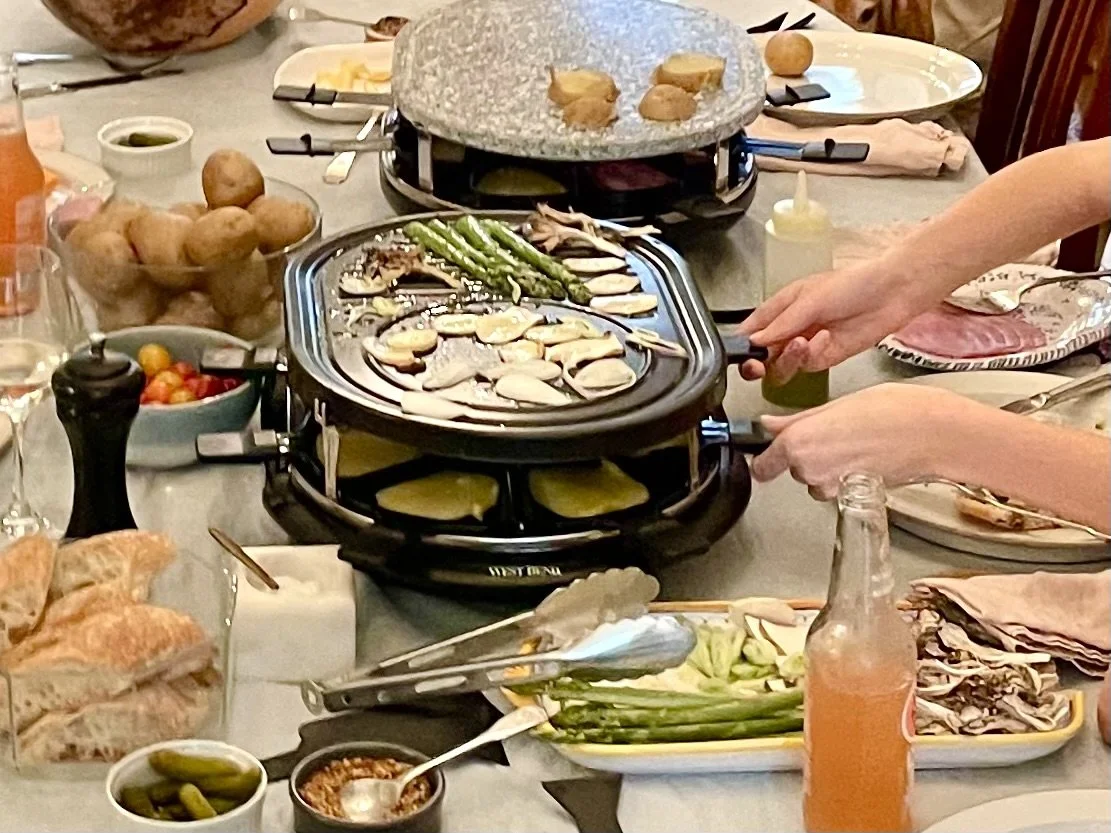
Long before videos of molten cheese at Christmas markets went viral on TikTok, our friend (and former au pair) Mari gifted us an 8-person raclette maker, one Christmas when our three kids were small. She wanted to share her German family’s tradition of celebrating the new year with this interactive meal and so we did, in Brooklyn, arranging combinations of boiled sliced potatoes, ham, vegetables and cornichons in the little trays and topping them with indecent amounts of cheese to be melted under the broiler. With ceremony, we prepared and laid out all the fixings on platters and rummaged around in the basement for an extension cord that would allow us to power up the machine on our dining room table. For the children, the activity was an exercise in restraint and delayed gratification, as the best results come from ignoring the trays until the cheese is bubbling and lacy and toasty around the edges. Meanwhile, slices of meat and vegetables sizzled on the upper deck grill surface, rounding out the meal. We all compared technique and flavor combinations with delight, marveling at how we each had a distinct approach but were united in our passion for melted cheese. Some of us were methodical, some more slapdash, some chaotic and even outrageous in the amounts of cheese and improbable combos we dared to pile in the trays. In the years since, we bring out the machine and revive the tradition at least once a winter, when raclette—a seasonal treat—is available in our local cheese store. In my neighborhood I can usually find French, Swiss, and even Vermont-made raclette. The tradition itself is originally Swiss, from the Alps, but many people in Swiss-adjacent countries and beyond enjoy it. One year, a French friend, Miriam, hauled over her own machine so we had a total of 16 broiling trays to feed a hungry crew of kids and adults.

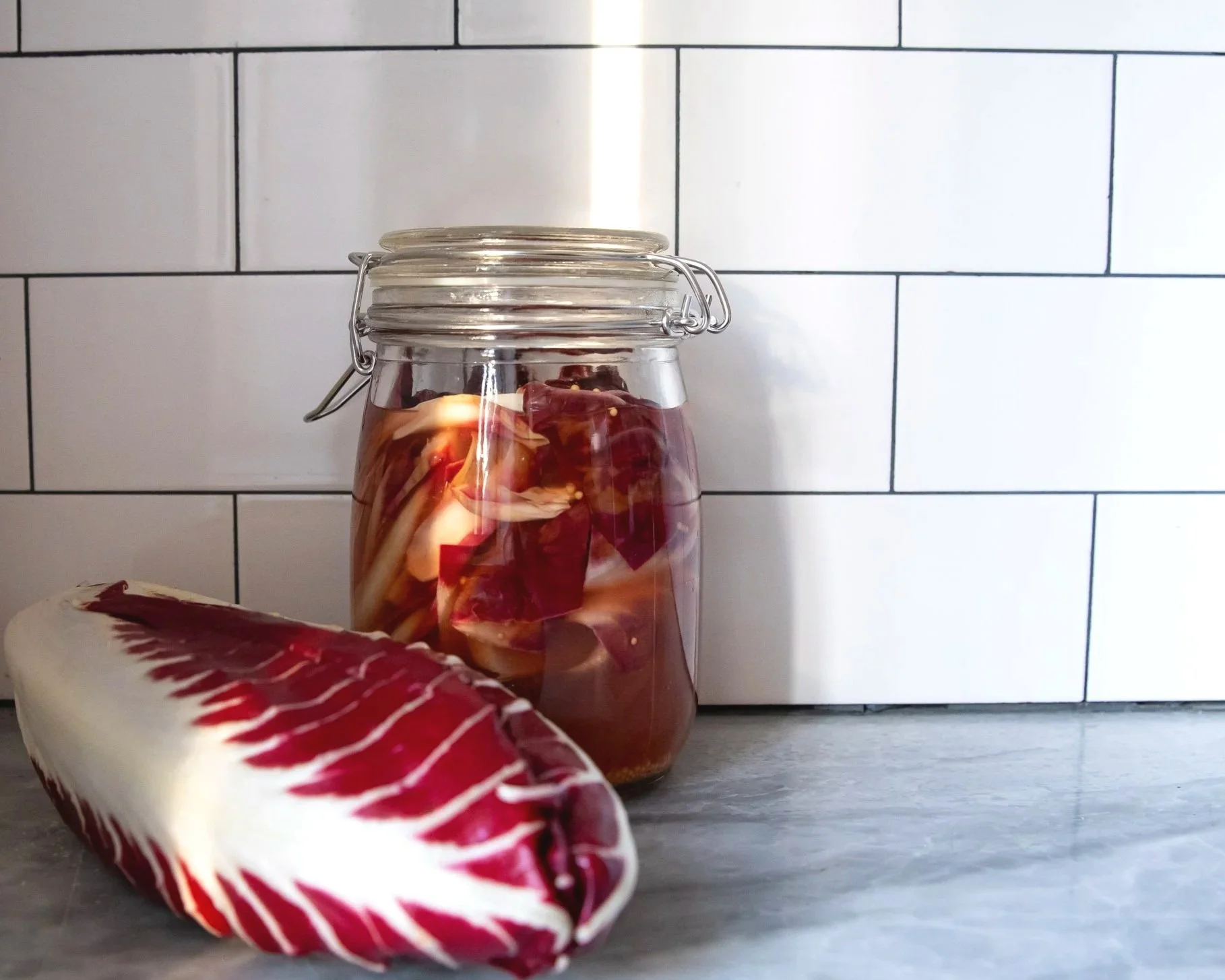
This winter, I have become singlemindedly fixated on pickling radicchio. Specialty chicories, with their vintage silk hues, have enjoyed an extended vogue, to the point where I almost—but don’t quite—feel jaded when I see a chicory salad on a restaurant menu. Don’t get me wrong, I adore those bitter leaves, and I’m a fool for any pink or purple vegetable, in general. Their bitter notes taste exciting and bracing when offset by sweet, fatty, tart, and nutty flavors (preferably all in the same bite). Nonetheless, I’ve been restless to try something new with them. You can see the results in the recipe below. I have become unreasonably happy to see a bright jar of these swishy pickles greet me when I open the refrigerator, and the deep magenta, bitterish vinegar left behind after the pickles are eaten can be upcycled into salad dressings and other preparations, such as a rosy vinegar chicken.

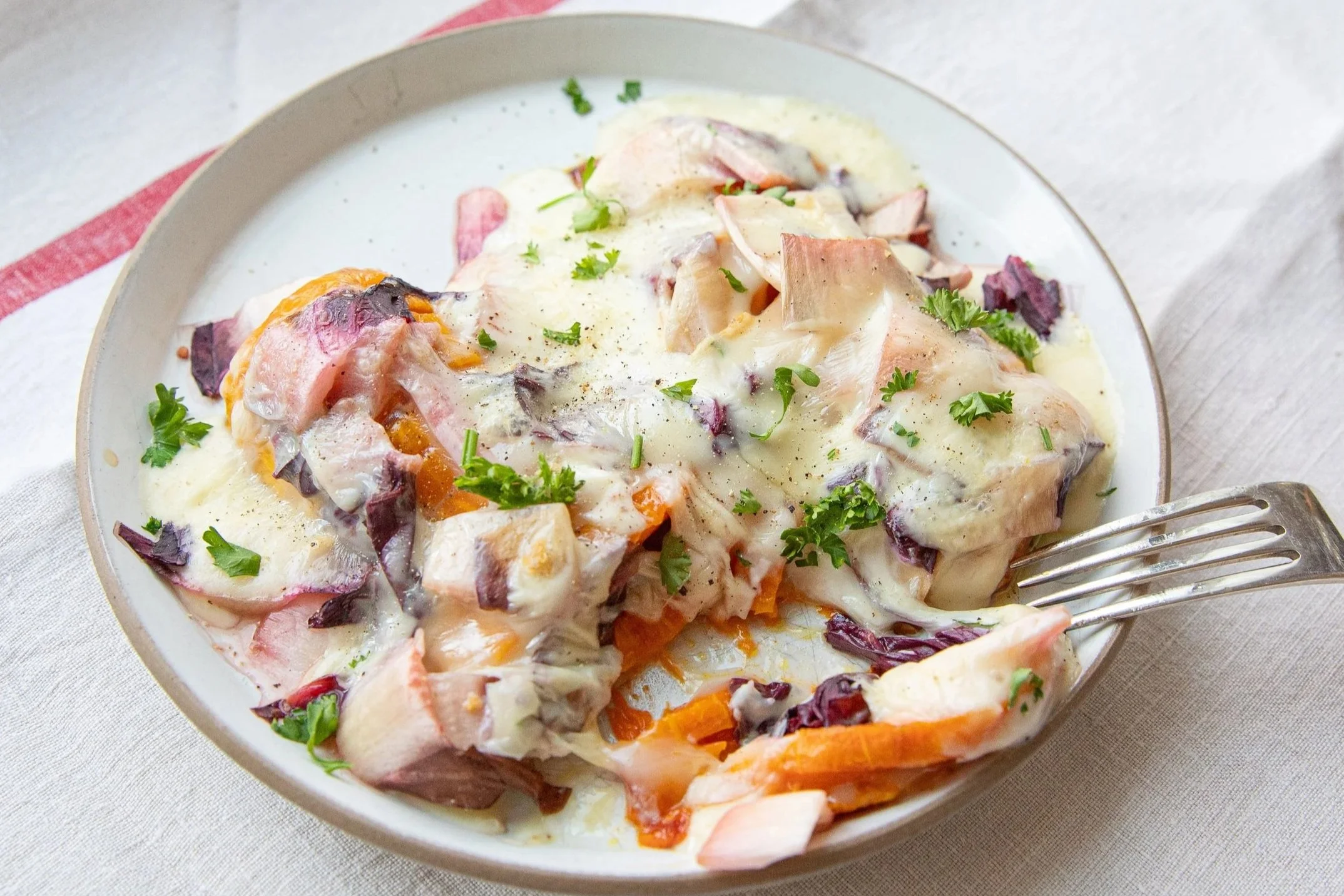
Always looking for an excuse to melt and enjoy cheese when it’s cold outside (or not!) I recently fetched some French raclette (which is generally stinkier than the Swiss variety) and composed a vegetarian dish that warms from within. Teamed with roasted honeynut squash and a smattering of pickled radicchio, it’s the perfect montage of sweet, bitter, tart, and yes—oozing decadent rich cheese. It’s not an everyday dish, just as raclette is not an everyday activity, but it’s a special and deeply satisfying one. The special occasion may be the new year (which is new yet), a dry January treat paired with an N/A IPA, a snowy day, a night with friends by the fire, or just a comforting solo lunch when it’s cold outside and you need a distraction from the world.

Note: Perhaps the easiest way to experience raclette’s charm is to spread some boiled, sliced potatoes onto a sheet tray, top with raclette, and run it under the oven broiler until it’s bubbling and toasty. Scatter chopped chives or scallions on top if you want. It’s the ultimate après-ski treat!

Pickled radicchio of my dreams

Pickled radicchio

Ingredients:

  • 4 cups apple cider vinegar

  • 1 tablespoon sea salt

  • 2 teaspoons sugar

  • 2 teaspoons yellow mustard seed

  • 1 head radicchio, preferably the long, red Treviso variety (its sturdy spines hold up to pickling)

Instructions:

Chop the radicchio leaves crosswise into a few segments of around 1 1/2 inch long. You can keep the tiny inner leaves whole. Arrange the leaves into a wide-mouthed jar or jars so that they are wedged firmly in there and filling the space (but not crushed). Put the vinegar and other ingredients in a saucepan and bring to a boil, then shut off the heat. Pour into the jar(s) over the radicchio until the leaves are covered. Close and leave at room temperature for a couple of days, then move to the refrigerator.

*Pickling notes: You can also seal the jars in a water bath. I am lazy and tend to make small batches of pickles, which I then move to the refrigerator. This is a full-vinegar pickle so yes, it is quite tart! I like it that way for my winter recipes, but you are welcome to dilute the vinegar with water, up to a 50/50 vinegar/water split—just make sure to refrigerate within a couple of days if you do this.

A decadent vegetarian meal

winter squash, pickled radicchio & raclette

Serves 4

Ingredients:

  • 2 honeynut squashes (or very small butternut squashes)

  • Olive oil for cooking

  • Salt and pepper to taste

  • Pickled radicchio, chopped roughly - about 1 cup

  • 8 ounces raclette cheese

Instructions:

  1. Preheat oven to 375°. Peel the squashes, cut off their ends, and slice longways into halves. Scoop out the seeds, and discard (or save for roasting). Set a half on its flat, cut side on a cutting board. Make vertical, parallel cuts into the round surface of squash, without cutting all the way through—stop about a 1/4 inch from the bottom. This is the hasselback technique (read more here). Repeat with subsequent squash halves. Next, arrange squashes, flat sides down, into a baking tray and drizzle liberally with olive oil, salt and pepper. Roast in the oven for about 45 minutes, or until squashes are tender and top is beginning to crisp and brown slightly.

  2. When done, take the tray out of the oven and switch the oven to broil. Meanwhile, arrange pickled radicchio atop squashes, allowing some of the extra vinegar brine to settle down into the hasselback grooves (you can drizzle a little extra brine on, as well). Slice the cheese (unless it is presliced) and lay it generously atop the squash, covering all surfaces. Run it under the broiler, watching very carefully, until cheese is melted and bubbling. Serve immediately.

Raclette machines in action! It looks like we got fancy with maitake mushrooms and asparagus that year.

The Cooks Who Came Before Us

Today would have been my Dad’s 78th birthday. I miss him all the time, especially when there’s something funny or exciting I really want to tell him about, and I have that split second impulse to shoot him an email or pick up the phone…and then I realize with a pit in my stomach that I can’t. If he were still alive I would tell him about an article that I just had published, which happens to be about his own mother—my Mimi—who was a food writer from 1946-1976. It’s also about all the women who came before, who helped build food writing back when it was seen as “just women’s work.” Please have a read. I’m thrilled to be featured in Comestible Journal and am a fierce advocate for small, independent publications.

Also: Dad was a huge influence on my love for food, cooking, and writing about it. He was always a great supporter and teacher. In honor of his birthday I’m including a version of a piece that I wrote in 2017 for The Virginia Sportsman magazine.

°°°

Hunter, Fisherman, and Chef

Fall 2017

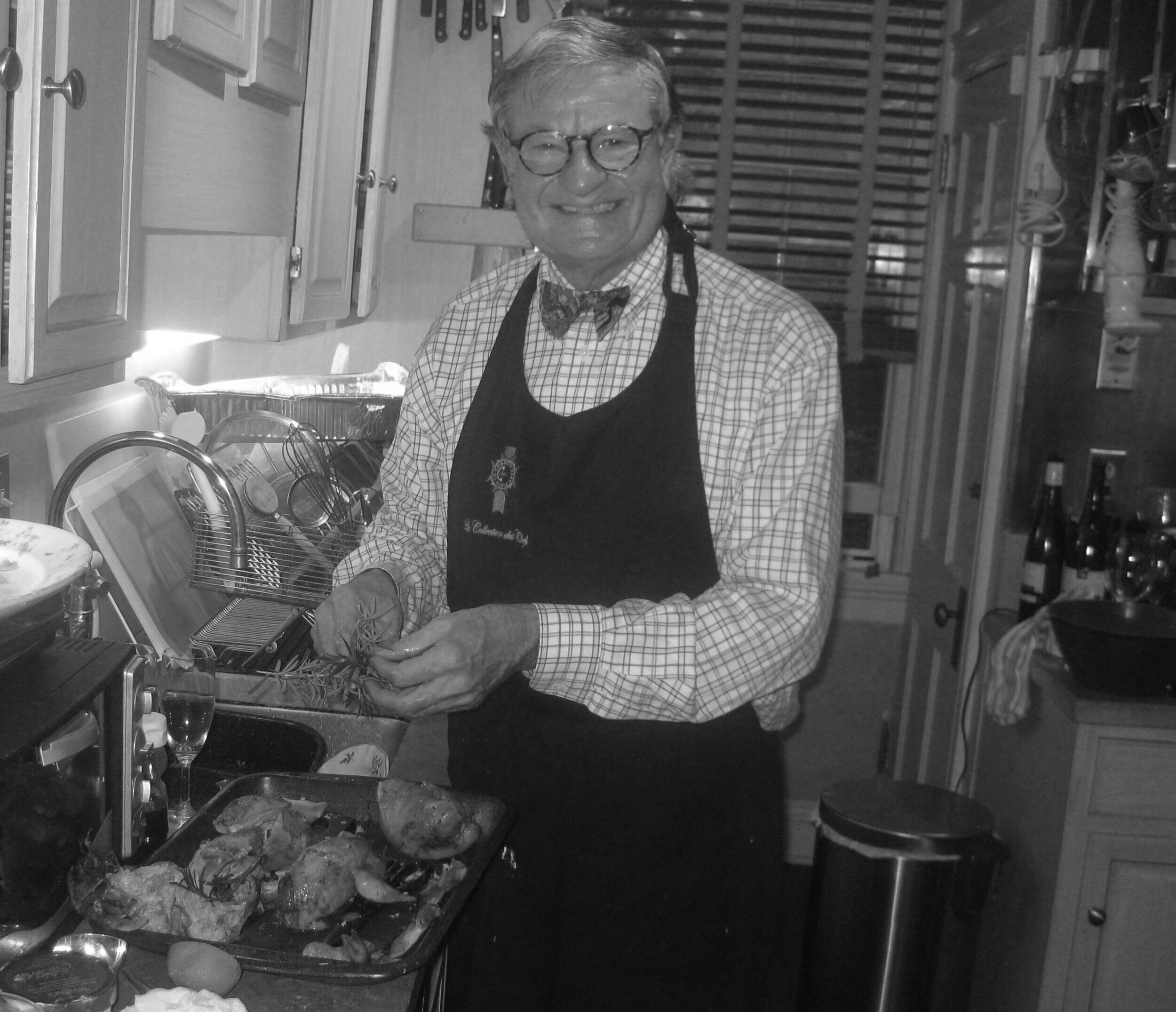
This May marked the passing of my father, Andy Williams, who was a longtime reader of this magazine; he also served as an inspiration and a tremendous resource for the recipes and stories I’ve put down here. Many who knew him would agree that he was not only passionate about hunting and fishing—as he was about his many chosen pursuits—but he was also an accomplished cook of wild-caught foods. He was generous with his talents and over the years came to be known as the chef-in-residence during the many hunting and fishing expeditions he enjoyed with friends. In many respects, these occasions became happenings around food, as well as celebrations of the bounty that nature had provided.

Back when I was a young child, I cringed at the bundles of bird carcasses he hauled home along with muddy boots and bloodied hunting gear, and I’m sure I pleaded with him tearfully to stop killing the creatures I saw as friends. I hadn’t yet made the connection between the hamburgers and chicken nuggets I enjoyed and the animals they had previously been, nor did I think about the quality of those animals’ lives. What I eventually learned, by watching his rituals, was a natural completeness and circularity of tracking and taking wild animals, preparing them, using every possible part of them, and crafting a beautiful meal that could be shared among friends. This knowledge was a gift—so many children now are disconnected from the origins of their food, and I got to understand and appreciate this ancient cycle from an early age.

I also got to learn a trick or two, as Dad was constantly refining his repertoire of recipes and adding new ones to it—whether taking courses at Le Cordon Bleu in Paris, or experimenting with a new-to-him ingredient such as harissa or quatres épices, or tinkering with a recipe he had somehow cajoled a famous restaurant chef into sharing with him.

One constant was his stock-making routine, which took place every year once the air became crisp, and he’d amassed enough game bird frames and cast-off bits to fill the basement freezer. Then, he lugged down his tallest stockpot, which took its place on the rear right quadrant of the stove, beside the small wooden barrel into which he poured leftover wine to make his own vinegar. The first day, the pot sat tranquilly as delicate currents circulated around the jumble of bones, vegetables, and bundled herbs inside. Once the liquid went to gold and had drunk all the essence of the solids, he ran the whole mess through a fine, cone-shaped strainer into a smaller pot, where the clear stock concentrated further, overnight and into the next day, darkening from wheat-colored to ochre, and finally deepening to a rich umber emulsion through which bubbles rose thickly. You could chart the progress of the stock’s reduction by the strata of skin deposited around the inside of the pot, ruffling in the rising steam.

My love of cooking was born and grew in that kitchen, as I assisted or sometimes just watched, listened, and smelled. Even during the vegetarian years of my teens, I was attuned to what was going on at the stove and had a solid respect (if not appetite) for hunting and the reverence and resourcefulness that can and should go along with it. Later, with genuine interest, I spent many afternoons beside him at the counter, learning the components of classic cuisine, as well as how to clean and prepare wild birds and fish. By the time I was enrolled in cooking school in my 20’s, I was already conversant in the vocabulary of the kitchen and comfortable with the more visceral aspects of working with food.

Dad and I cooked many meals together over the years and enjoyed even more that we didn’t prepare; food was one thing we could always agree on and look forward to during visits. I will miss those times with him in the kitchen or at the table, and I treasure the recipes he so enthusiastically shared with me, usually in the form of rambling emails with meandering asides and silly puns. Below are two of his beloved fall classics, in time for dove season—one of his favorite times of year.

IMG_2874.jpg

Andy’s Grilled Dove in Red Wine Marinade

Serves four as an appetizer, or as part of a dinner buffet

Ingredients:

  • 1 cup red wine

  • 1 shot of gin

  • 1/2 cup olive oil

  • 3 TBS. soy sauce

  • 3 TBS. balsamic vinegar

  • 1 dried bay leaf

  • 2 sprigs fresh thyme (or 1 TBS dried thyme)

  • 1 tsp. ground black pepper

  • 1 tsp. salt

  • 8 whole dove breasts, split, on the bone (16 halves)

Directions:

  1. Whisk together all ingredients except dove breasts. Lay breasts in a casserole dish or in a zip-lok bag, and pour marinade over them. Marinate for approximately two hours, making sure the meat is uniformly covered with the marinade.

  2. Preheat grill to medium-high flame. When the grill is hot, lightly oil grates and grill dove 3-4 minutes each side, or until medium rare. Do not overcook. Dove breasts can be eaten straight off the grill or served with collard greens, or with sautéed cabbage and caraway seeds.

Dove Breasts with Jalapeños and Bacon

Serves 4 as an appetizer

Ingredients:

  • 8 whole dove breasts, split, on the bone (16 halves)

  • 8 small jalapeño peppers, halved and seeded or 16 rounds of jarred jalapeño slices

  • 8 slices bacon, cut in half

  • toothpicks or small bamboo skewers

Instructions:

  1. Preheat grill to medium-high. Lightly oil grates. Lay dove breasts bone side up on a flat surface, and place a piece of jalapeño in the center of each piece. Wrap a piece of bacon snugly around each breast, crossing ends on top of jalapeño, and secure with a toothpick or skewer.

  2. Grill breasts 4-5 minutes on each side, or until dove meat is medium rare and bacon is crisp. Enjoy!


Source: https://www.comestiblejournal.com/