Long before videos of molten cheese at Christmas markets went viral on TikTok, our friend (and former au pair) Mari gifted us an 8-person raclette maker, one Christmas when our three kids were small. She wanted to share her German family’s tradition of celebrating the new year with this interactive meal and so we did, in Brooklyn, arranging combinations of boiled sliced potatoes, ham, vegetables and cornichons in the little trays and topping them with indecent amounts of cheese to be melted under the broiler. With ceremony, we prepared and laid out all the fixings on platters and rummaged around in the basement for an extension cord that would allow us to power up the machine on our dining room table. For the children, the activity was an exercise in restraint and delayed gratification, as the best results come from ignoring the trays until the cheese is bubbling and lacy and toasty around the edges. Meanwhile, slices of meat and vegetables sizzled on the upper deck grill surface, rounding out the meal. We all compared technique and flavor combinations with delight, marveling at how we each had a distinct approach but were united in our passion for melted cheese. Some of us were methodical, some more slapdash, some chaotic and even outrageous in the amounts of cheese and improbable combos we dared to pile in the trays. In the years since, we bring out the machine and revive the tradition at least once a winter, when raclette—a seasonal treat—is available in our local cheese store. In my neighborhood I can usually find French, Swiss, and even Vermont-made raclette. The tradition itself is originally Swiss, from the Alps, but many people in Swiss-adjacent countries and beyond enjoy it. One year, a French friend, Miriam, hauled over her own machine so we had a total of 16 broiling trays to feed a hungry crew of kids and adults.
This winter, I have become singlemindedly fixated on pickling radicchio. Specialty chicories, with their vintage silk hues, have enjoyed an extended vogue, to the point where I almost—but don’t quite—feel jaded when I see a chicory salad on a restaurant menu. Don’t get me wrong, I adore those bitter leaves, and I’m a fool for any pink or purple vegetable, in general. Their bitter notes taste exciting and bracing when offset by sweet, fatty, tart, and nutty flavors (preferably all in the same bite). Nonetheless, I’ve been restless to try something new with them. You can see the results in the recipe below. I have become unreasonably happy to see a bright jar of these swishy pickles greet me when I open the refrigerator, and the deep magenta, bitterish vinegar left behind after the pickles are eaten can be upcycled into salad dressings and other preparations, such as a rosy vinegar chicken.
Always looking for an excuse to melt and enjoy cheese when it’s cold outside (or not!) I recently fetched some French raclette (which is generally stinkier than the Swiss variety) and composed a vegetarian dish that warms from within. Teamed with roasted honeynut squash and a smattering of pickled radicchio, it’s the perfect montage of sweet, bitter, tart, and yes—oozing decadent rich cheese. It’s not an everyday dish, just as raclette is not an everyday activity, but it’s a special and deeply satisfying one. The special occasion may be the new year (which is new yet), a dry January treat paired with an N/A IPA, a snowy day, a night with friends by the fire, or just a comforting solo lunch when it’s cold outside and you need a distraction from the world.
Note: Perhaps the easiest way to experience raclette’s charm is to spread some boiled, sliced potatoes onto a sheet tray, top with raclette, and run it under the oven broiler until it’s bubbling and toasty. Scatter chopped chives or scallions on top if you want. It’s the ultimate après-ski treat!
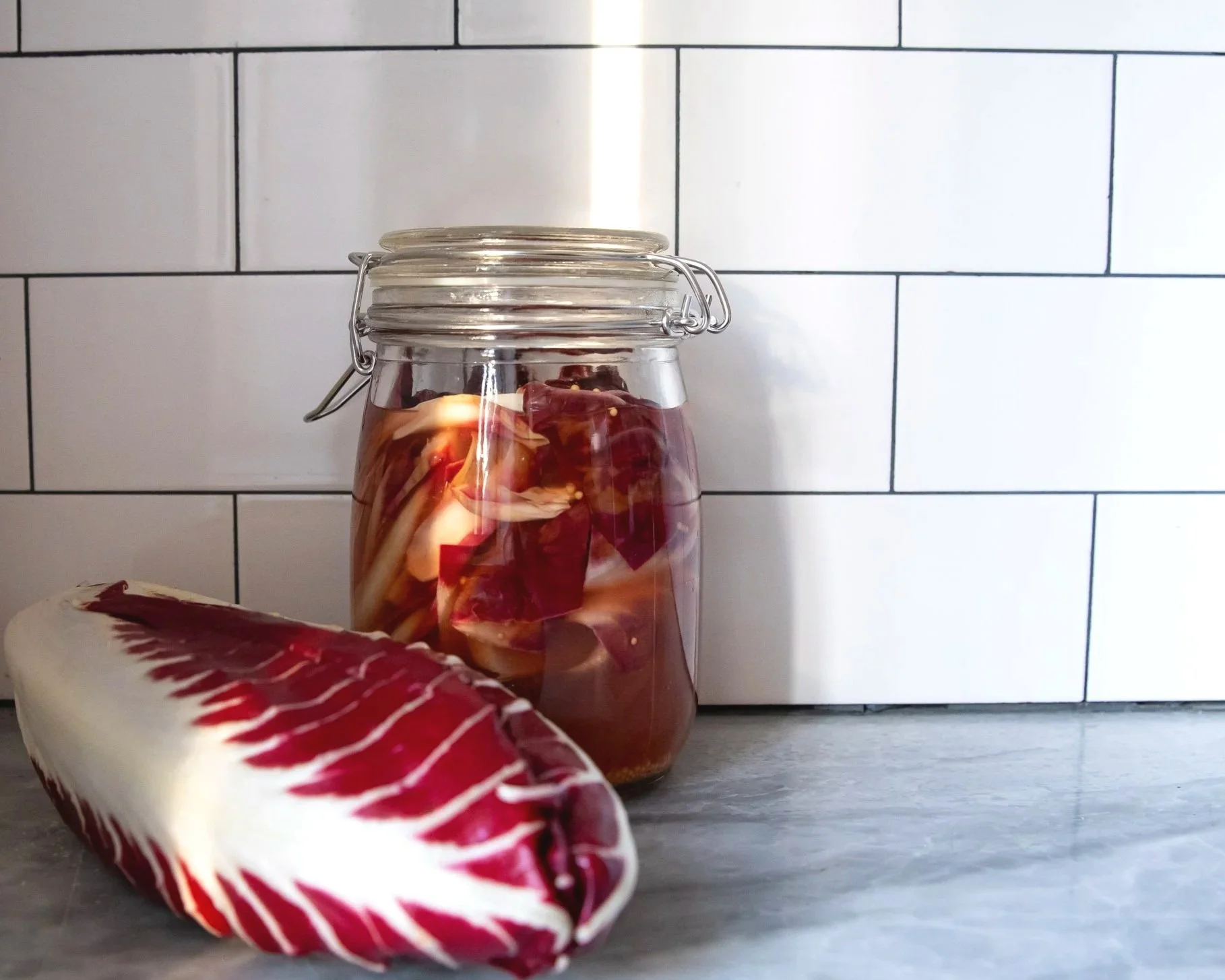
Pickled radicchio of my dreams
Pickled radicchio
Ingredients:
4 cups apple cider vinegar
1 tablespoon sea salt
2 teaspoons sugar
2 teaspoons yellow mustard seed
1 head radicchio, preferably the long, red Treviso variety (its sturdy spines hold up to pickling)
Instructions:
Chop the radicchio leaves crosswise into a few segments of around 1 1/2 inch long. You can keep the tiny inner leaves whole. Arrange the leaves into a wide-mouthed jar or jars so that they are wedged firmly in there and filling the space (but not crushed). Put the vinegar and other ingredients in a saucepan and bring to a boil, then shut off the heat. Pour into the jar(s) over the radicchio until the leaves are covered. Close and leave at room temperature for a couple of days, then move to the refrigerator.
*Pickling notes: You can also seal the jars in a water bath. I am lazy and tend to make small batches of pickles, which I then move to the refrigerator. This is a full-vinegar pickle so yes, it is quite tart! I like it that way for my winter recipes, but you are welcome to dilute the vinegar with water, up to a 50/50 vinegar/water split—just make sure to refrigerate within a couple of days if you do this.
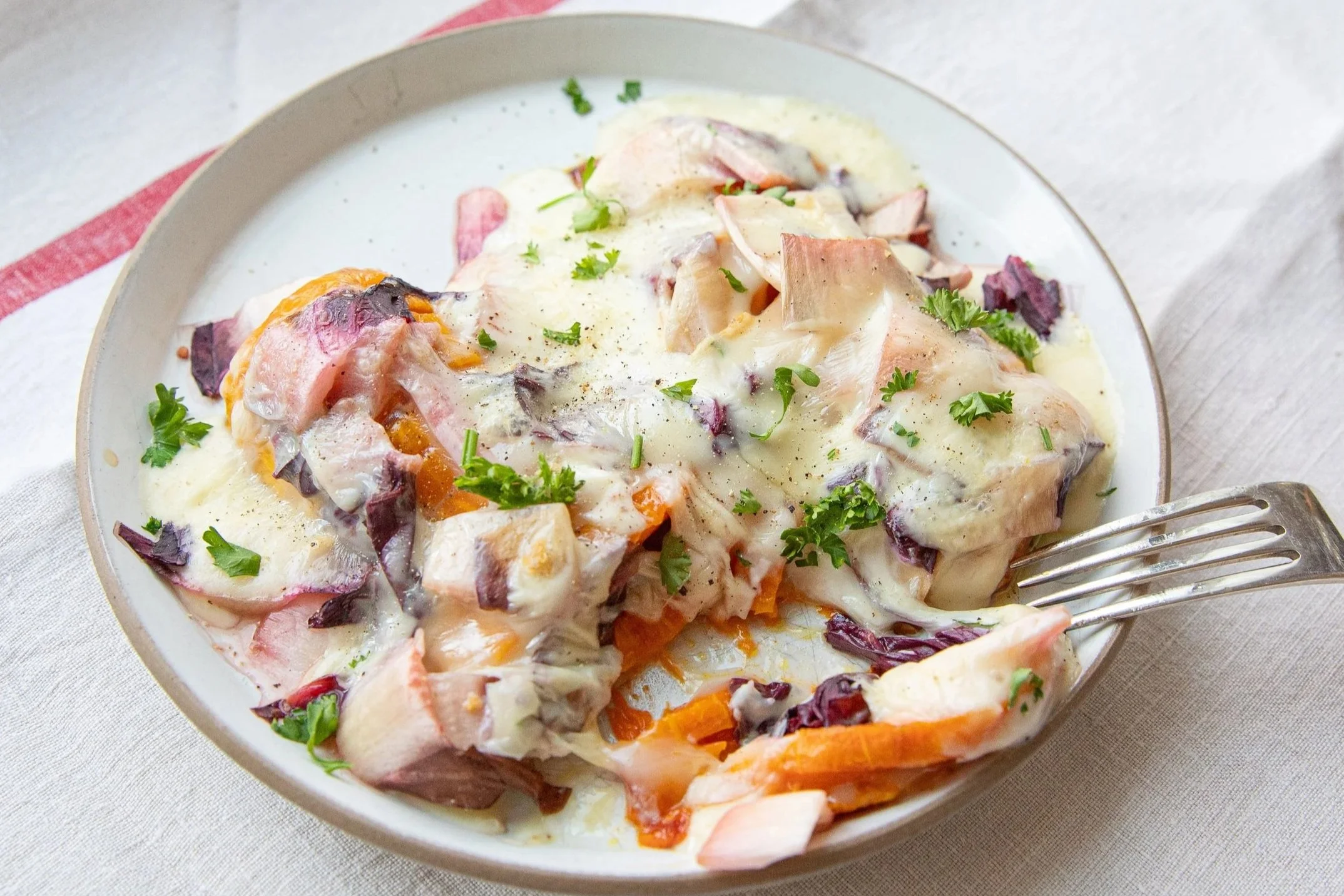
A decadent vegetarian meal
winter squash, pickled radicchio & raclette
Serves 4
Ingredients:
2 honeynut squashes (or very small butternut squashes)
Olive oil for cooking
Salt and pepper to taste
Pickled radicchio, chopped roughly - about 1 cup
8 ounces raclette cheese
Instructions:
Preheat oven to 375°. Peel the squashes, cut off their ends, and slice longways into halves. Scoop out the seeds, and discard (or save for roasting). Set a half on its flat, cut side on a cutting board. Make vertical, parallel cuts into the round surface of squash, without cutting all the way through—stop about a 1/4 inch from the bottom. This is the hasselback technique (read more here). Repeat with subsequent squash halves. Next, arrange squashes, flat sides down, into a baking tray and drizzle liberally with olive oil, salt and pepper. Roast in the oven for about 45 minutes, or until squashes are tender and top is beginning to crisp and brown slightly.
When done, take the tray out of the oven and switch the oven to broil. Meanwhile, arrange pickled radicchio atop squashes, allowing some of the extra vinegar brine to settle down into the hasselback grooves (you can drizzle a little extra brine on, as well). Slice the cheese (unless it is presliced) and lay it generously atop the squash, covering all surfaces. Run it under the broiler, watching very carefully, until cheese is melted and bubbling. Serve immediately.
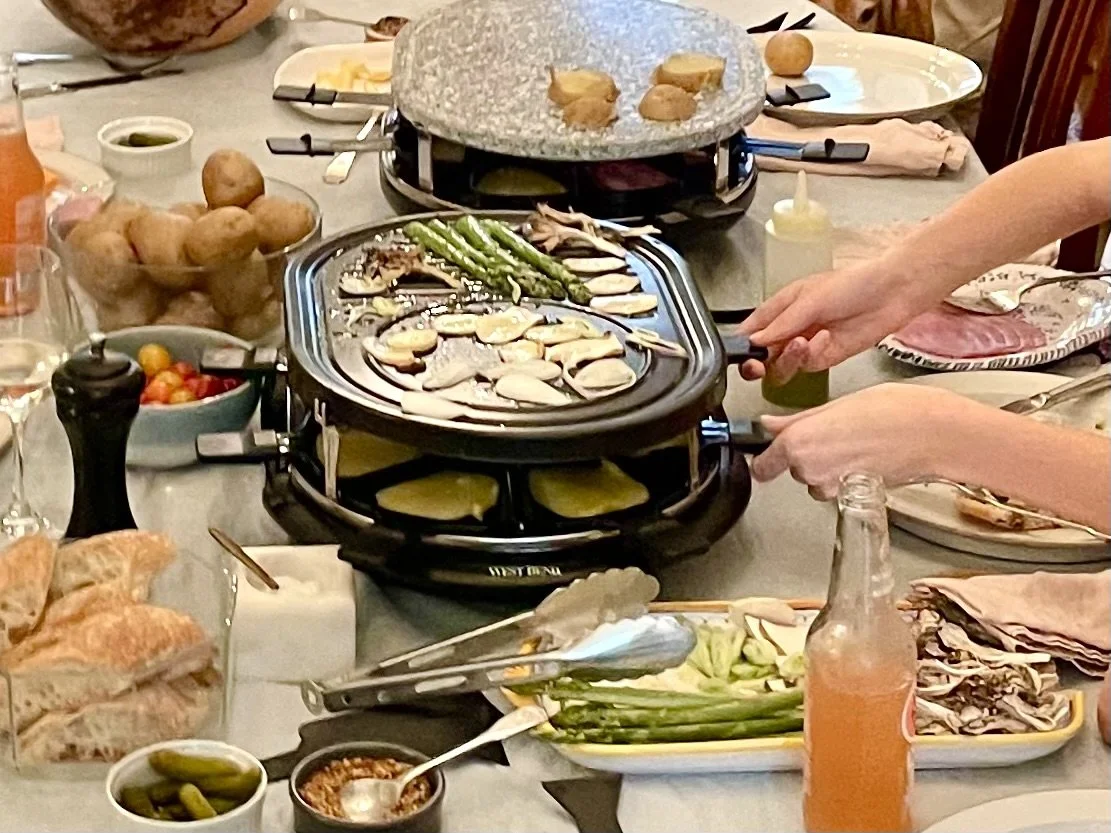
Raclette machines in action! It looks like we got fancy with maitake mushrooms and asparagus that year.


