Raclette and Radicchio

Long before videos of molten cheese at Christmas markets went viral on TikTok, our friend (and former au pair) Mari gifted us an 8-person raclette maker, one Christmas when our three kids were small. She wanted to share her German family’s tradition of celebrating the new year with this interactive meal and so we did, in Brooklyn, arranging combinations of boiled sliced potatoes, ham, vegetables and cornichons in the little trays and topping them with indecent amounts of cheese to be melted under the broiler. With ceremony, we prepared and laid out all the fixings on platters and rummaged around in the basement for an extension cord that would allow us to power up the machine on our dining room table. For the children, the activity was an exercise in restraint and delayed gratification, as the best results come from ignoring the trays until the cheese is bubbling and lacy and toasty around the edges. Meanwhile, slices of meat and vegetables sizzled on the upper deck grill surface, rounding out the meal. We all compared technique and flavor combinations with delight, marveling at how we each had a distinct approach but were united in our passion for melted cheese. Some of us were methodical, some more slapdash, some chaotic and even outrageous in the amounts of cheese and improbable combos we dared to pile in the trays. In the years since, we bring out the machine and revive the tradition at least once a winter, when raclette—a seasonal treat—is available in our local cheese store. In my neighborhood I can usually find French, Swiss, and even Vermont-made raclette. The tradition itself is originally Swiss, from the Alps, but many people in Swiss-adjacent countries and beyond enjoy it. One year, a French friend, Miriam, hauled over her own machine so we had a total of 16 broiling trays to feed a hungry crew of kids and adults.

This winter, I have become singlemindedly fixated on pickling radicchio. Specialty chicories, with their vintage silk hues, have enjoyed an extended vogue, to the point where I almost—but don’t quite—feel jaded when I see a chicory salad on a restaurant menu. Don’t get me wrong, I adore those bitter leaves, and I’m a fool for any pink or purple vegetable, in general. Their bitter notes taste exciting and bracing when offset by sweet, fatty, tart, and nutty flavors (preferably all in the same bite). Nonetheless, I’ve been restless to try something new with them. You can see the results in the recipe below. I have become unreasonably happy to see a bright jar of these swishy pickles greet me when I open the refrigerator, and the deep magenta, bitterish vinegar left behind after the pickles are eaten can be upcycled into salad dressings and other preparations, such as a rosy vinegar chicken.

Always looking for an excuse to melt and enjoy cheese when it’s cold outside (or not!) I recently fetched some French raclette (which is generally stinkier than the Swiss variety) and composed a vegetarian dish that warms from within. Teamed with roasted honeynut squash and a smattering of pickled radicchio, it’s the perfect montage of sweet, bitter, tart, and yes—oozing decadent rich cheese. It’s not an everyday dish, just as raclette is not an everyday activity, but it’s a special and deeply satisfying one. The special occasion may be the new year (which is new yet), a dry January treat paired with an N/A IPA, a snowy day, a night with friends by the fire, or just a comforting solo lunch when it’s cold outside and you need a distraction from the world.

Note: Perhaps the easiest way to experience raclette’s charm is to spread some boiled, sliced potatoes onto a sheet tray, top with raclette, and run it under the oven broiler until it’s bubbling and toasty. Scatter chopped chives or scallions on top if you want. It’s the ultimate après-ski treat!
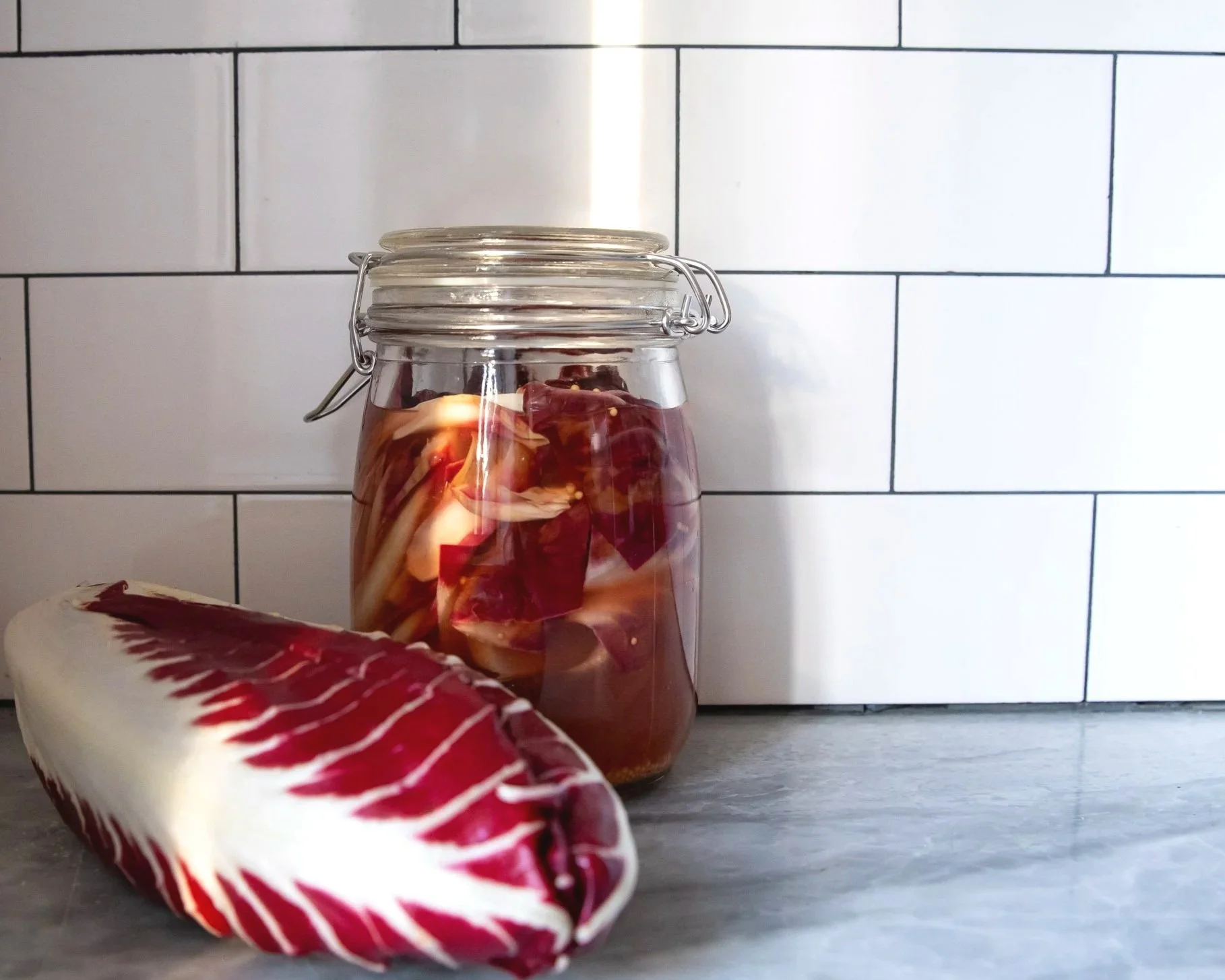
Pickled radicchio of my dreams

Pickled radicchio

Ingredients:

  • 4 cups apple cider vinegar

  • 1 tablespoon sea salt

  • 2 teaspoons sugar

  • 2 teaspoons yellow mustard seed

  • 1 head radicchio, preferably the long, red Treviso variety (its sturdy spines hold up to pickling)

Instructions:

Chop the radicchio leaves crosswise into a few segments of around 1 1/2 inch long. You can keep the tiny inner leaves whole. Arrange the leaves into a wide-mouthed jar or jars so that they are wedged firmly in there and filling the space (but not crushed). Put the vinegar and other ingredients in a saucepan and bring to a boil, then shut off the heat. Pour into the jar(s) over the radicchio until the leaves are covered. Close and leave at room temperature for a couple of days, then move to the refrigerator.

*Pickling notes: You can also seal the jars in a water bath. I am lazy and tend to make small batches of pickles, which I then move to the refrigerator. This is a full-vinegar pickle so yes, it is quite tart! I like it that way for my winter recipes, but you are welcome to dilute the vinegar with water, up to a 50/50 vinegar/water split—just make sure to refrigerate within a couple of days if you do this.
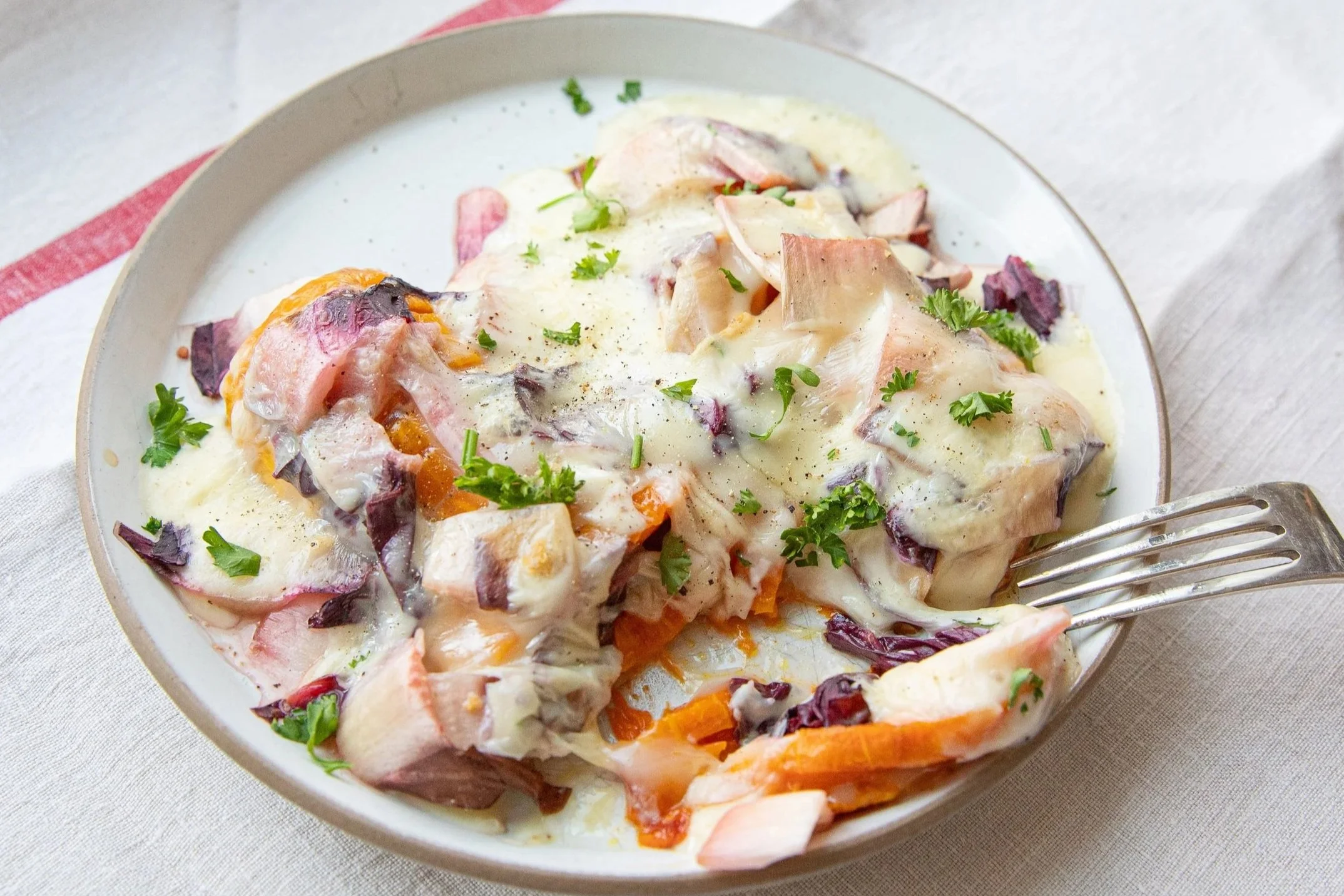
A decadent vegetarian meal

winter squash, pickled radicchio & raclette

Serves 4

Ingredients:

  • 2 honeynut squashes (or very small butternut squashes)

  • Olive oil for cooking

  • Salt and pepper to taste

  • Pickled radicchio, chopped roughly - about 1 cup

  • 8 ounces raclette cheese

Instructions:

  1. Preheat oven to 375°. Peel the squashes, cut off their ends, and slice longways into halves. Scoop out the seeds, and discard (or save for roasting). Set a half on its flat, cut side on a cutting board. Make vertical, parallel cuts into the round surface of squash, without cutting all the way through—stop about a 1/4 inch from the bottom. This is the hasselback technique (read more here). Repeat with subsequent squash halves. Next, arrange squashes, flat sides down, into a baking tray and drizzle liberally with olive oil, salt and pepper. Roast in the oven for about 45 minutes, or until squashes are tender and top is beginning to crisp and brown slightly.

  2. When done, take the tray out of the oven and switch the oven to broil. Meanwhile, arrange pickled radicchio atop squashes, allowing some of the extra vinegar brine to settle down into the hasselback grooves (you can drizzle a little extra brine on, as well). Slice the cheese (unless it is presliced) and lay it generously atop the squash, covering all surfaces. Run it under the broiler, watching very carefully, until cheese is melted and bubbling. Serve immediately.
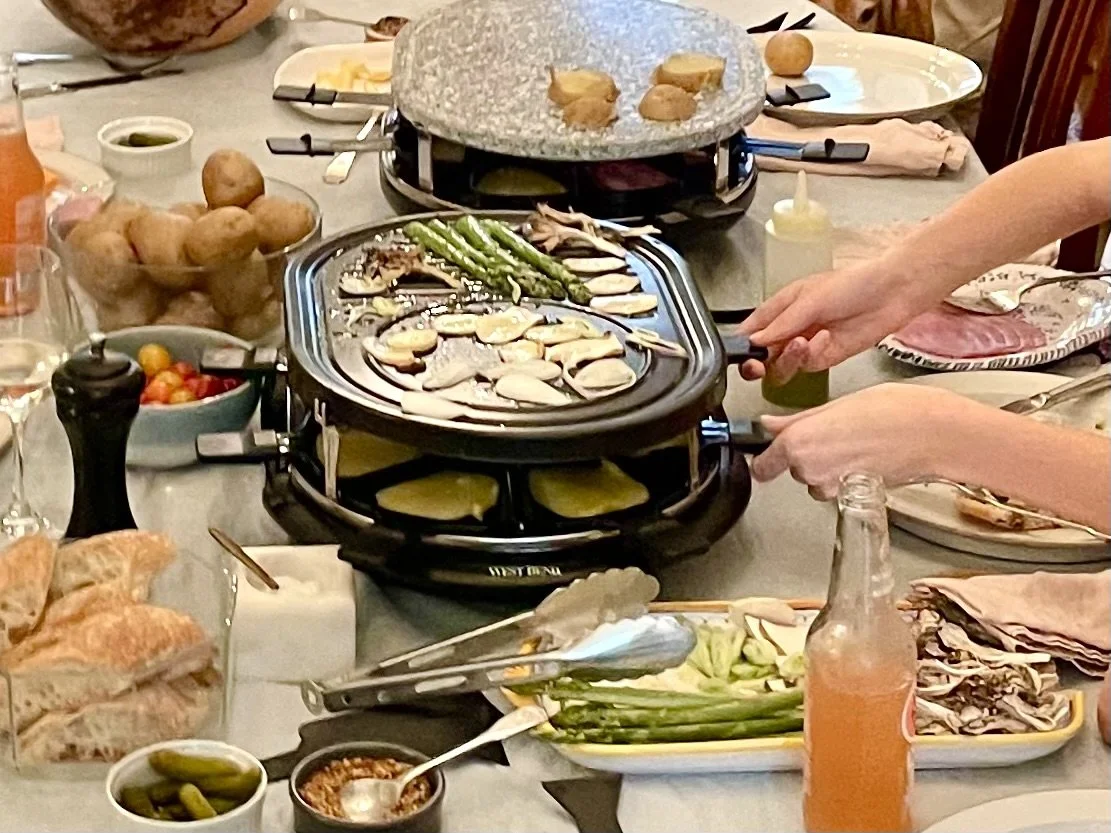
Raclette machines in action! It looks like we got fancy with maitake mushrooms and asparagus that year.
Adventures in Pescatarianism

The first week of 2022, my boy came home from school and announced: “I’m becoming a pescatarian,” and then paused for effect. He was a few weeks away from his ninth birthday, and we’d been down this road before. A few years back it was an attempt to go full-on vegetarian, a run that lasted all of a week and a half and was stymied, as is usually the case, by bacon.

“Oh really?” I asked, unconvinced. “What’s the inspiration?”

“S. is going vegetarian for the new year, so I figured I would too. Except I don’t have a problem eating fish.”

The logistics would not be much of an issue. Our oldest daughter has been an unflagging vegetarian for nearly four years, and we’ve all slowly drifted toward a more plant-based existence. When my son made this announcement, his sister had just returned to school, and we were thinking about braising a big pot of pork paprika…but apparently the universe had other plans. Instead, we pulled together an emergency “Sahadi’s night,” a thing in our family that involves picking up middle eastern prepared foods from a favorite market and making a big Greek-ish salad to go alongside it.

“How’d it go with the pescatarianism?” I asked him the next night at dinner.

“Great,” he said. “Except they had hotdogs in the cafeteria and they smelled soooo good. I was almost tempted.”

“Gross,” said his 15-year-old sister.

“And S.?”

“Still goin’.”

On the third day, my son came home and announced that his friend S., erstwhile vegetarian, had lapsed.

“What did it?” I asked.

“They had pulled pork in the cafeteria and he couldn’t stand the temptation. ‘I just gotta!’ he said.”

“And you?”

“Oh, I’m committed.”

We had miso salmon for dinner.

Things continued like this for the next few weeks. S. continued to hop on and off the wagon, and my son recounted his friend’s struggles with temptations of the fleshly variety.

“I hope you’re not shaming him?” I asked, suddenly worried he might be that sanctimonious kid everyone avoids at lunchtime. “You’re not a meat-shamer, are you?”

“Oh no! Definitely not. I do me, he does him.”

A month and a half later, he’s still going strong, and I realize the ways in which he’s becoming a big person, capable of long-term goals and commitments. I’m a little verklempt. Many nights we rely on our vegetarian favorites: savory tarts, tofu tikka masala made with a favorite vegan simmer sauce, simple pastas sans meat. For him and his sister I created a vegetarian version of hearty French Onion Soup. We have fish some nights, but given the state of today’s fisheries limit consumption. One favorite is slow-roasted salmon which I first spread with a paste of white miso, sesame oil, rice vinegar, ginger, and garlic. Another salmon favorite is Alison Roman’s slow roasted citrus salmon with herb salad (possible paywall). They are both easy.

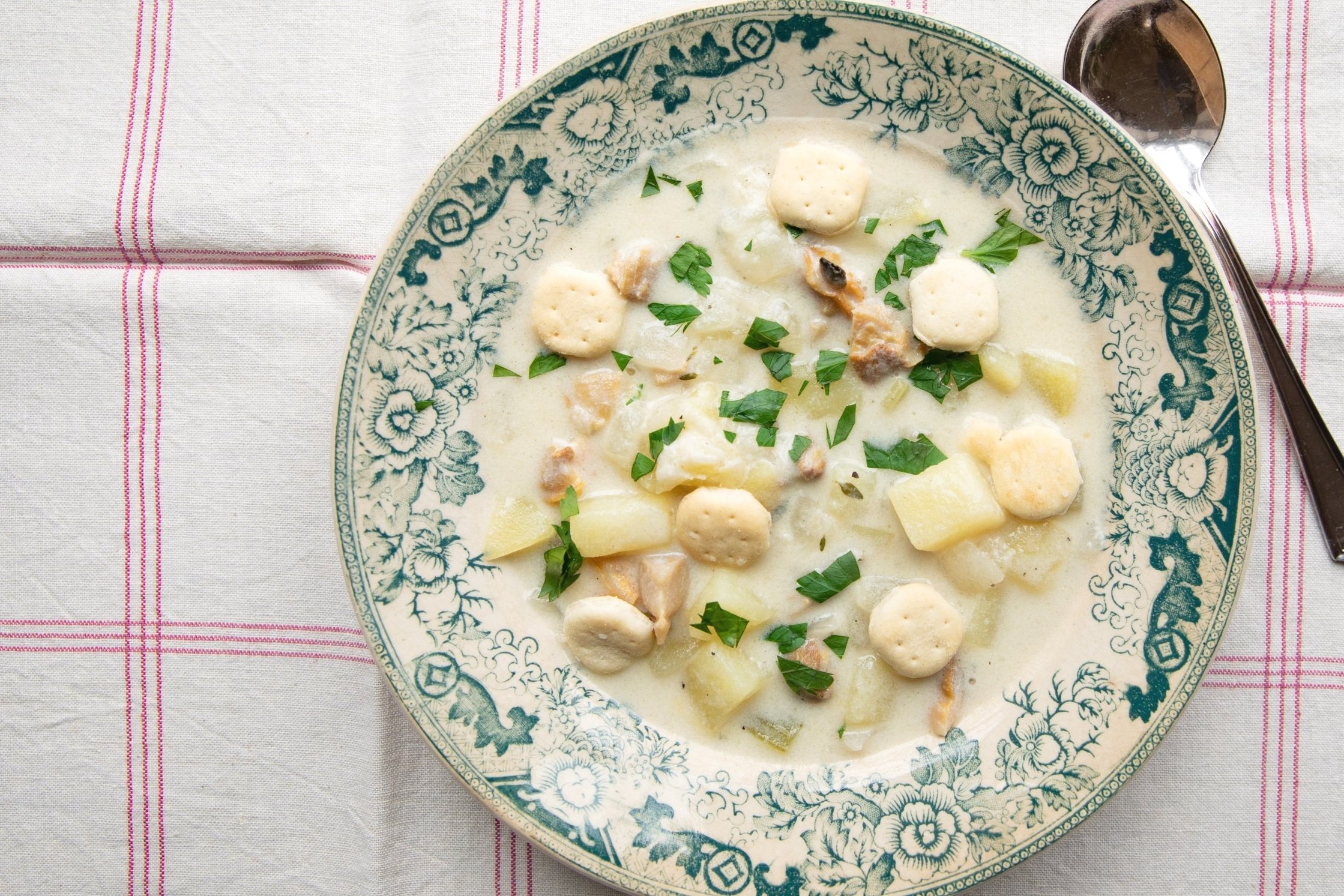
But the thing the boy has been asking for again and again is clam chowder, one of his most favorite foods. He once ate a raw oyster for $20, but other than that, shellfish is usually off the table. Except for clam chowder. This week, I granted him his wish. It holds a special place in my heart, too, ever since I enjoyed a bowl at Grand Central Oyster Bar in my early NYC days. Like barbecue, clam chowder is a culinary lightning rod, telling of regional alliances and gustatory prejudices. Manhattan or New England? White, red, or clear? Bacon or none? For us, the answer in that winter moment was simple: white clam chowder with no bacon and no frills. A deep dive into internet chowderdom revealed a dizzying number of options. The two I was most drawn to were Sam Sifton’s, made with bacon and cream, and Ina Garten’s, with no bacon or cream and a large amount of roux. I came up with something in between, creamy and rich but not too thick, and of course no bacon, because that would just be mean. It starts with whole fresh clams, which may seem fussy but I promise is worth it. I got mine from our local shop Fish Tales, and the fishmonger kindly scooped armloads of free oyster crackers into the bag. The chowder came together nicely, and as we warmed from the cold February day the taste was rich, briny, and comforting.

Our rendition of New England clam chowder

CLAM CHOWDER RECIPE

Ingredients:

  • 24 medium/large sized top neck clams (or cherry stone, or if using quahogs, fewer clams), rinsed briefly

  • 1 large white or yellow onion, diced

  • Salt - 1 teaspoon or as needed

  • 5 tablespoons unsalted butter

  • 1/2 cup dry white wine

  • 4 medium yellow potatoes, peeled and cubed

  • 1-2 ribs celery, peeled and diced

  • A couple sprigs fresh thyme

  • 1 bay leaf

  • 3 tablespoons all-purpose flour

  • 2 cups whole milk

  • 1/4 cup cream

  • Chopped parsley for garnish

  • Oyster crackers (Optional but recommended!)

Instructions:

  1. In a large heavy pot or Dutch oven (le Creuset or similar), put the clams and about a cup of water. Cover and heat for 10-15 minutes, checking occasionally. When clams are open, transfer them to a bowl to cool. Discard any clams that haven’t opened after about 15 minutes. Important: Strain the liquid through a fine strainer and set the liquid aside for later—this will be your broth.

  2. Clean the pot and put it over medium heat. Add 2 tablespoons of the butter and the diced onions, and sprinkle with some salt and pepper. Cook gently for about 10 minutes, until onions are softened a bit but not browned at all. Add the potatoes, celery, thyme, and bay leaf and sauté, stirring, for a few minutes, then add the white wine. Let simmer for 5 minutes or so, allowing the wine to cook down a bit, then add in the strained clam broth and cover the pot. Cook over low-medium heat until potatoes are soft enough that they can be pierced with the tip of a knife.

  3. Meanwhile, prepare the clams: pull them out of their shells and discard the shells. Chop the clams into quarters or more if they are on the large size.

  4. In a small saucepan melt the remaining 3 tablespoons butter and then whisk in the flour. Cook, whisking, for 5 minutes, then add milk and continue cooking. Whisk until the lumps are out, milk is simmering and beginning to thicken. This will take around 10 minutes.

  5. Once potatoes are tender, add clams to the pot and pour in thickened milk mixture. Bring the pot to a simmer and cook for another few minutes. Taste for seasoning. Clams and their broth contain natural saltiness, but you may find the soup needs a little more. Just before serving, remove sprigs of thyme and the bay leaf, stir in cream, crank in some pepper, and taste once more for seasoning. Serve hot, with parsley sprinkled on top and oyster crackers.