Health class waffles

It’s fascinating how recipes find us and work their way into our lives—I’ve explored and thought about that a lot over the years. It’s likely that even people who aren’t avid cooks have a dish or two that came from another family member, or a friend, or an app or cookbook somewhere, and maybe they’ve forgotten how it got into their kitchen in the first place, but it’s there now, to stay. 

For me, some recipes that fall into that category are my favorite granola (thanks Kristen and Tara!) which I’ve altered slightly over the years and am never without. Pork Paprika, which originated as a veal recipe my Mom’s roommate, Bird, taught her in the 1960’s; Mom changed it to pork, and it is now my husband’s favorite apres ski dish to cook. Cassie’s miso chocolate chunk cookies—and these are a banger—were adapted by my sis from a local favorite bakery where she lives in Charlottesville, VA, and tweaked by me, a little bit, for this site. There are many more! 

This past weekend, I realized I had another that I’d never bothered to write down nor thought much about: Health Class Waffles. I’m pretty sure they don’t qualify as health food by any stretch, nor are they even healthy, but I had the epiphany that whenever waffles are called for, and it’s not super frequent, I reach for a certain community cookbook that is spiral bound and cheaply printed. My daughter’s health class compiled it in the 6th grade, and considering that daughter is now 20 and in college, it’s safe to say this recipe has legs. The batter-spattered page—the only one I ever turn to in that book—is marked with a post-it and I am now, finally, digitizing it here. 

I wish I could properly attribute this recipe, but we long ago lost track of the classmate who described it as a family recipe in the headnote; we’ll call him Ebenezer K. I tried to locate the recipe online to see where it may have originally come from, since family recipes usually, but don’t always, have a published forbear, so I had both Claude and Chat GPT do reverse searches (while we’re waiting for AI to overthrow humanity, might as well give it some more innocent tasks). The closest the chatbots could find was a recipe by Emeril Lagasse, which it doesn’t really resemble enough for me to consider it a match, so maybe Ebenezer K’s family created it, after all…or altered it enough to make it their own. Aside from the egg separation, it’s a pretty easy sequence that doesn’t require an overnight rise, which yeasted ones do. They are pleasantly buttery and fluffy, and if you cook them to the browner side of golden, as I like to do, they get nice and crispy around the edges.

And now onto the subject of toppings, the best part: What recently prompted me to reach for this recipe was brown cheese, specifically Norwegian brown cheese. When we were in Norway this summer we noted that this salty-caramelly brown cheese was often grated atop waffles, and even sold in Starbucks. I spied and picked up a cube of it at Sahadi’s with the intention of trying an at-home version. We are also fans of maple syrup, maple butter, whipped cream and strawberries, plain melted butter, and sometimes Marmite. Whatever toppings your heart desires, health class waffles are the vehicle. 

Health class waffles! Make them your own.


Health Class Waffles

Serves 4

Ingredients:

  • 1 cup flour 

  • 1 teaspoon baking powder

  • ½ teaspoon salt 

  • 2 large eggs, separated

  • 2 tablespoons sugar

  • 4 tablespoons unsalted butter, melted

  • 1 cup milk 

  • ½ teaspoon vanilla extract

Instructions:

  1. In a small bowl, whisk together flour, baking powder, and salt and set aside.

  2. Using an electric mixer or strong arm, beat egg whites until soft peaks form. Set aside.

  3. Beat together egg yolks and sugar until sugar is completely dissolved and the mixture is foamy. Add melted butter, milk, and vanilla and whisk together.

  4. Mix flour mixture into egg mixture just to combine.

  5. Fold in egg whites.

  6. Preheat waffle iron. Machines vary, but usually the highest setting is too hot. When heated, brush butter onto the top and bottom and ladle batter onto the iron, then close. Keep in mind batter spreads and often runs over, so leave don’t fill to the very edge. Serve waffles hot with preferred topping.

Take a picture here, take a souvenir

As we turn the final pages of summer, I’m still reflecting on some of its earlier chapters, such as a lovely week in Brittany that ended with a brief separation from my suitcase. The reunion was sweet, because along with dirty laundry and loose sand, there was my usual post-vacation haul—impulse and otherwise—from our time near the Gulf of Morbihan. As I unrolled t-shirts I kept unearthing things I’d forgotten I bought and enjoyed the small bursts of delight that ensued:

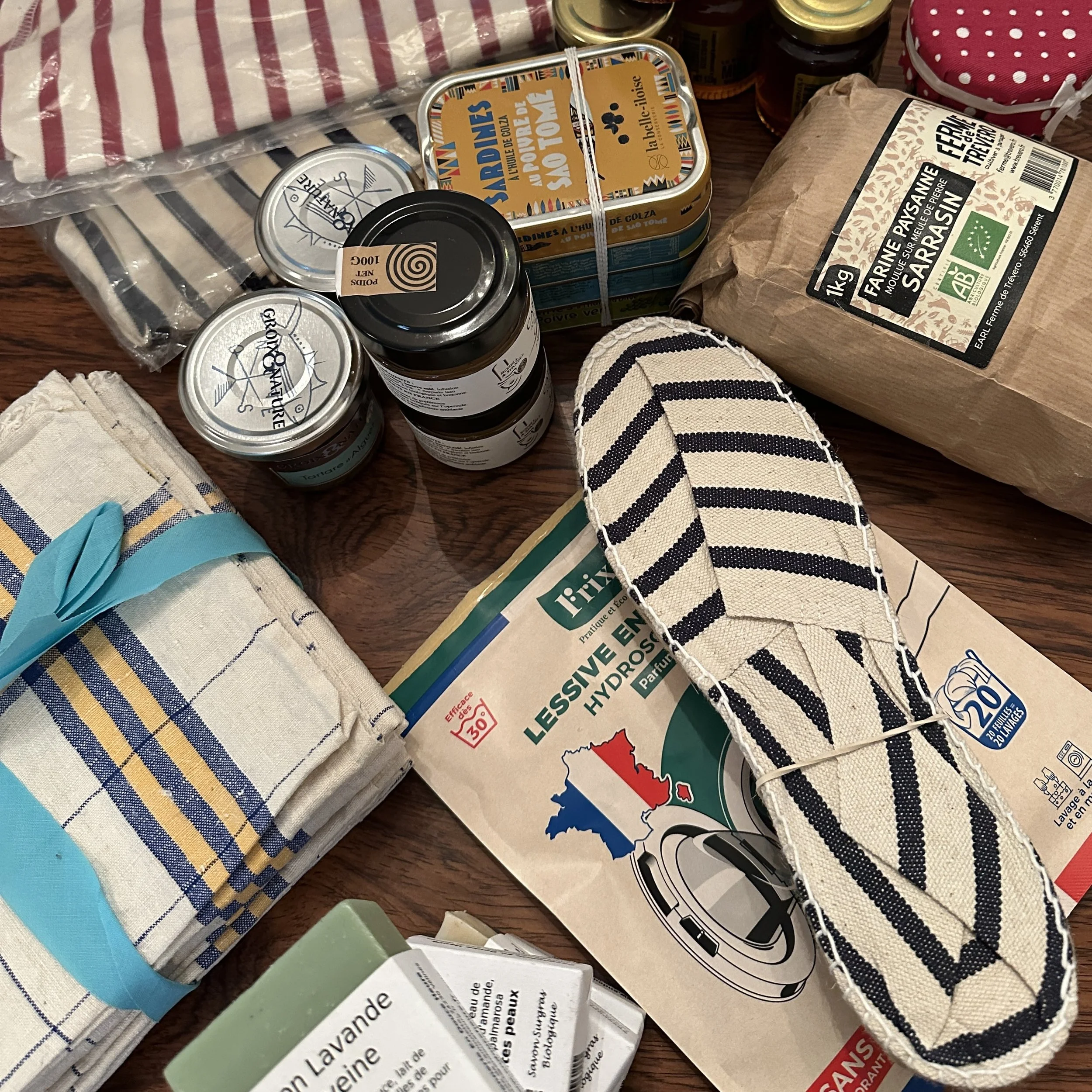
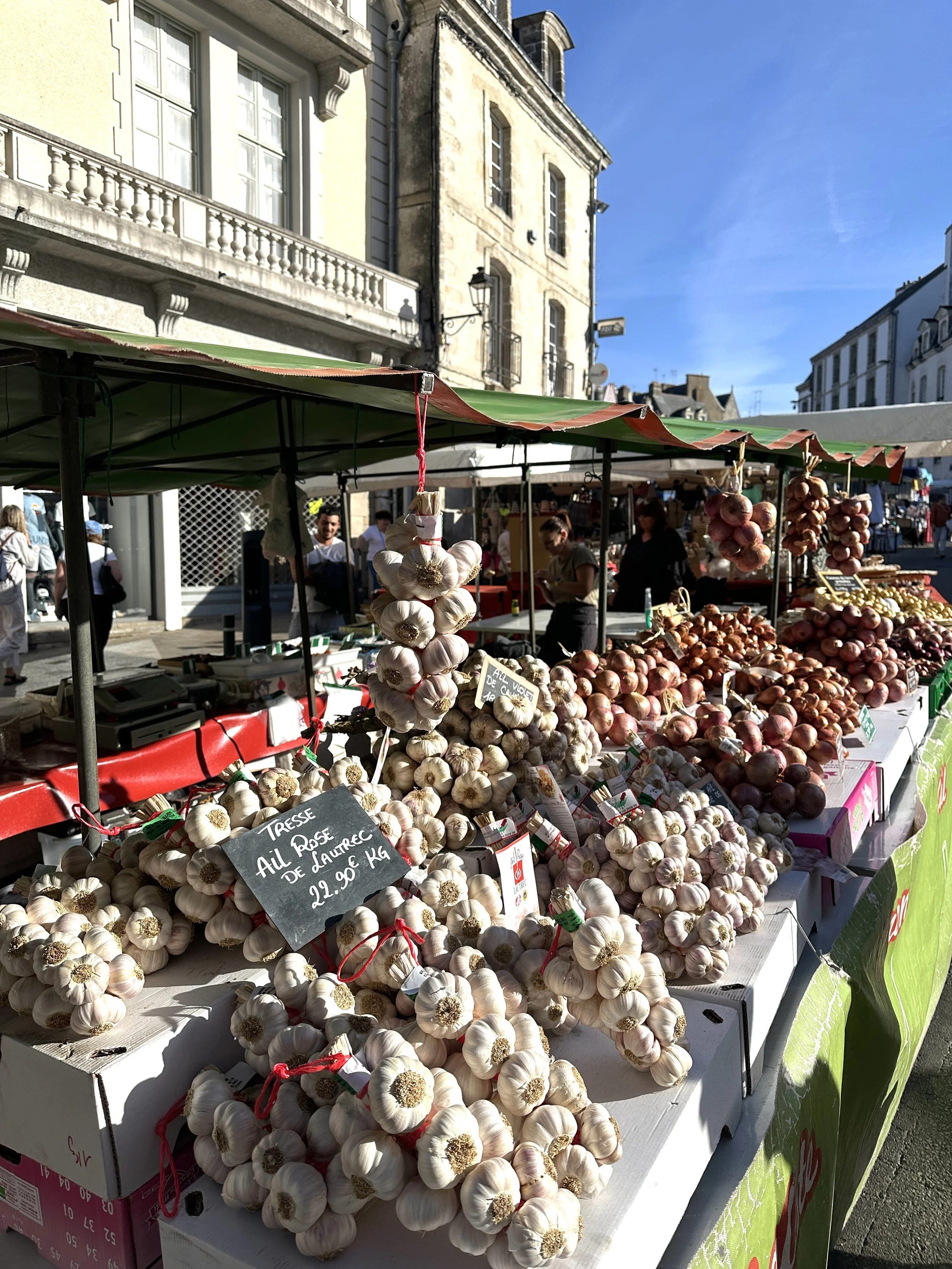
Buckwheat flour from the farmer’s market. Two jars of salted caramel infused with toasted buckwheat. Six jars of single varietal honey (chestnut tree, linden tree, wildflower, forest, general Brittany honey, etc.). Quiberon sardines in bright tins. Striped mariner shirts (the very soft off-brand ones you can find in the farmer’s market). Stripey espadrilles. Cassis & violet jam. Socks from Monoprix - so many! Vintage linens from a brocante.

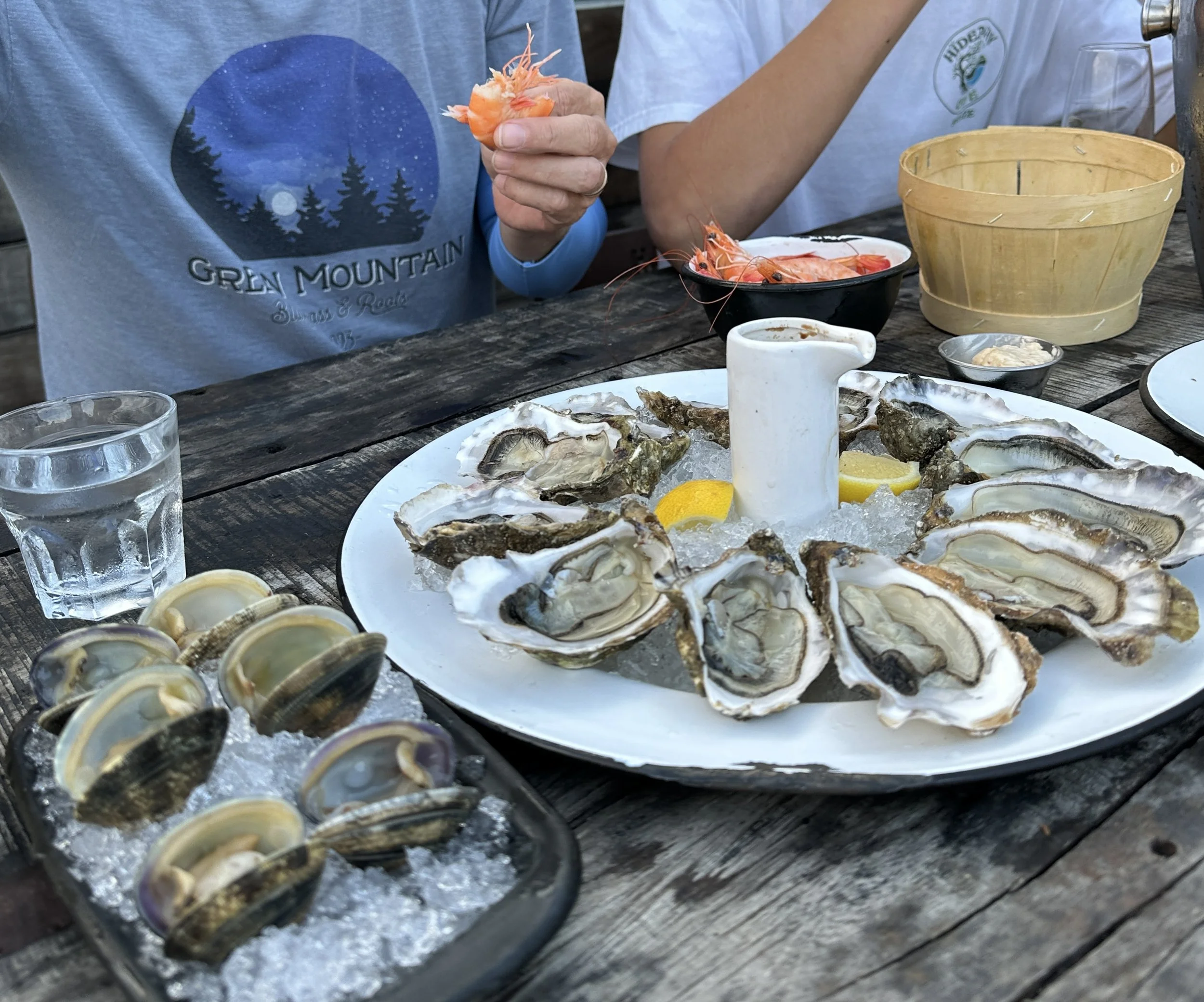
As I unpacked, I reflected on this vacation hoarding impulse of mine, and what it might say about me. Am I just the reflection of a culture that has become ever more grabby as the world burns? I realize that’s probably part of the story, along with a basic need to remember and draw out the essence of a vacation for a little while longer. Some things I couldn’t pack in a suitcase, though: the brisk breezes and sweet-saltiness of the Breton coast and the nutty taste of buckwheat. The stickiness of a Kouign-Amann. The grit of sand in my shoes and the sting of a sunburn. The piles of tiny pink shrimp at the fishmonger with their heads still on.

As I was picking up material goodies from the markets this summer, I was also quietly noting things the other cultures did well and differently from ours in the U.S.—the intangible things you can’t pack in a suitcase or eat later. I want to hold on to these for a bit longer, after the vacation and summer have come to a close.

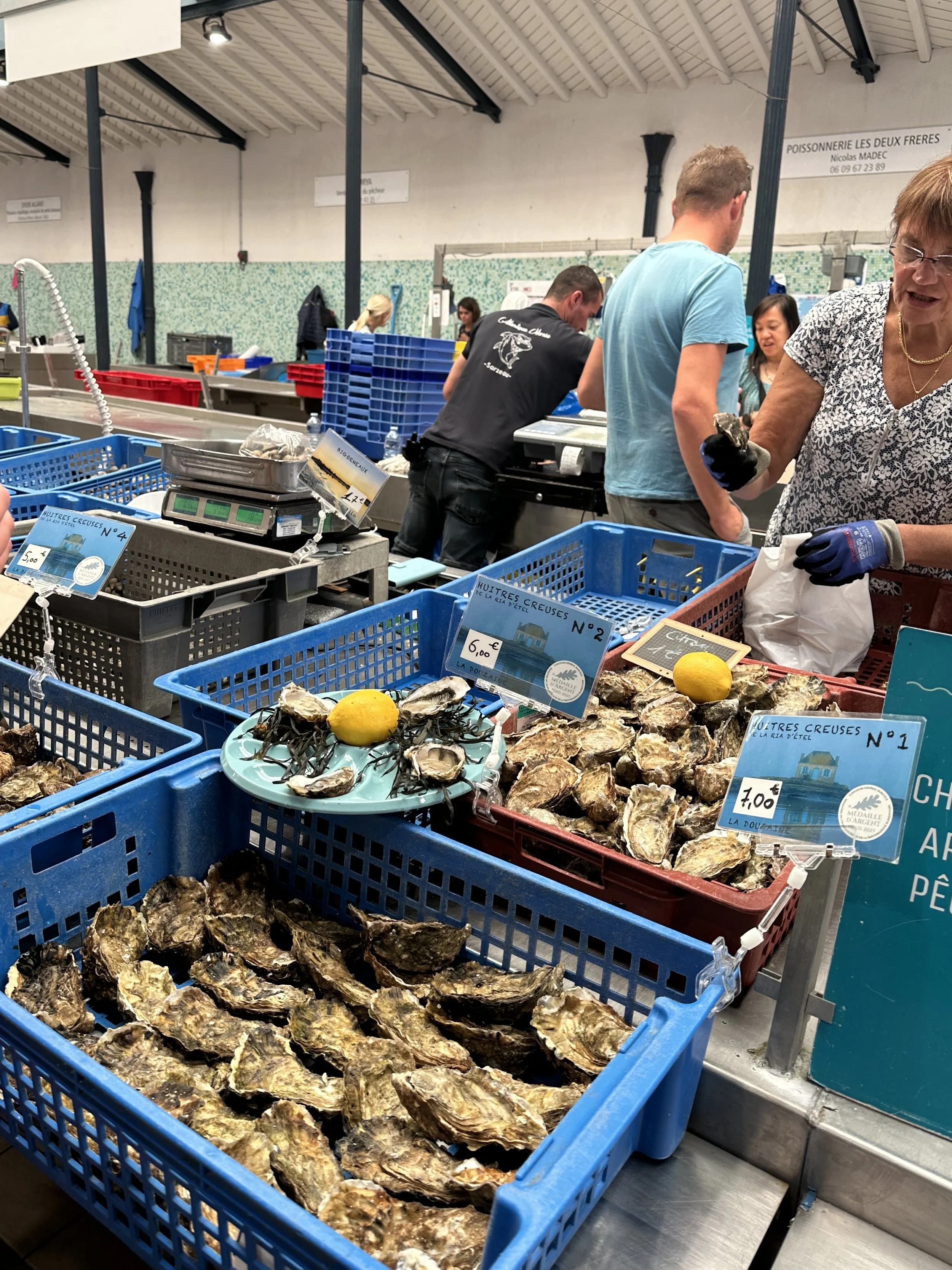
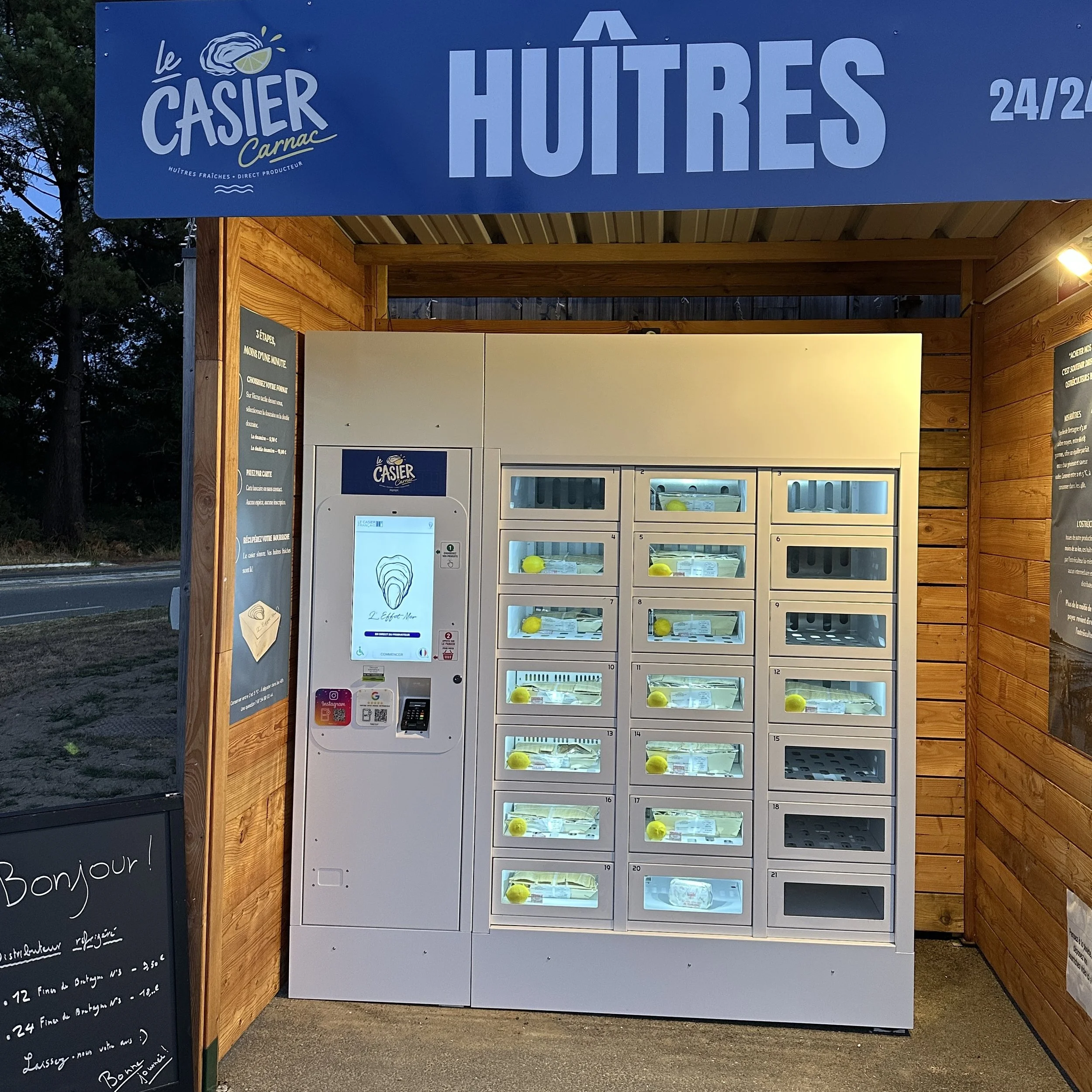
  • Oyster vending machines in Brittany

  • Bike culture in Amsterdam and the grace with which people move through the city as one with their bicycles.

  • Reverence for nature in Norway. We can all do better! Pick up our trash, learn the names of some wildflowers.

  • Hut culture in Norway—wow. The DNT network of hiking cabins are impeccably cared for by volunteers and are clean, stocked with wood, saunas, and odorless composting toilets you sprinkle wood chips into. The one we peeked into, in a remote area, had a separate kennel room for dogs. Upstream from the huts was a mossy spring that served as the water supply (the cabins contain buckets) and we filled our water bottles with this water and drank it untreated.

  • The GR34 1300 km-plus coastal hiking path along Brittany’s coastline. We picked up segments of this for afternoon hikes and meandered through rocky coves and oyster farms with their own, small tasting rooms.

  • Swedes’ unbridled joy in summer (and Scandinavia generally)

  • Garbage sorting in France. My family laughed at my excitement over visiting the compost bin by the port in Vannes where we stayed; inside of the biowaste bin was a little compartment with mulch and a scooper. A brief glimpse inside told me the citizens of Vannes were complying.

  • Learning new historical facts and in particular lore from the WWII Resistance, in Normandy’s museums and monuments. I had no idea the role the BBC played in carrying secret messages to the resistance in Europe.

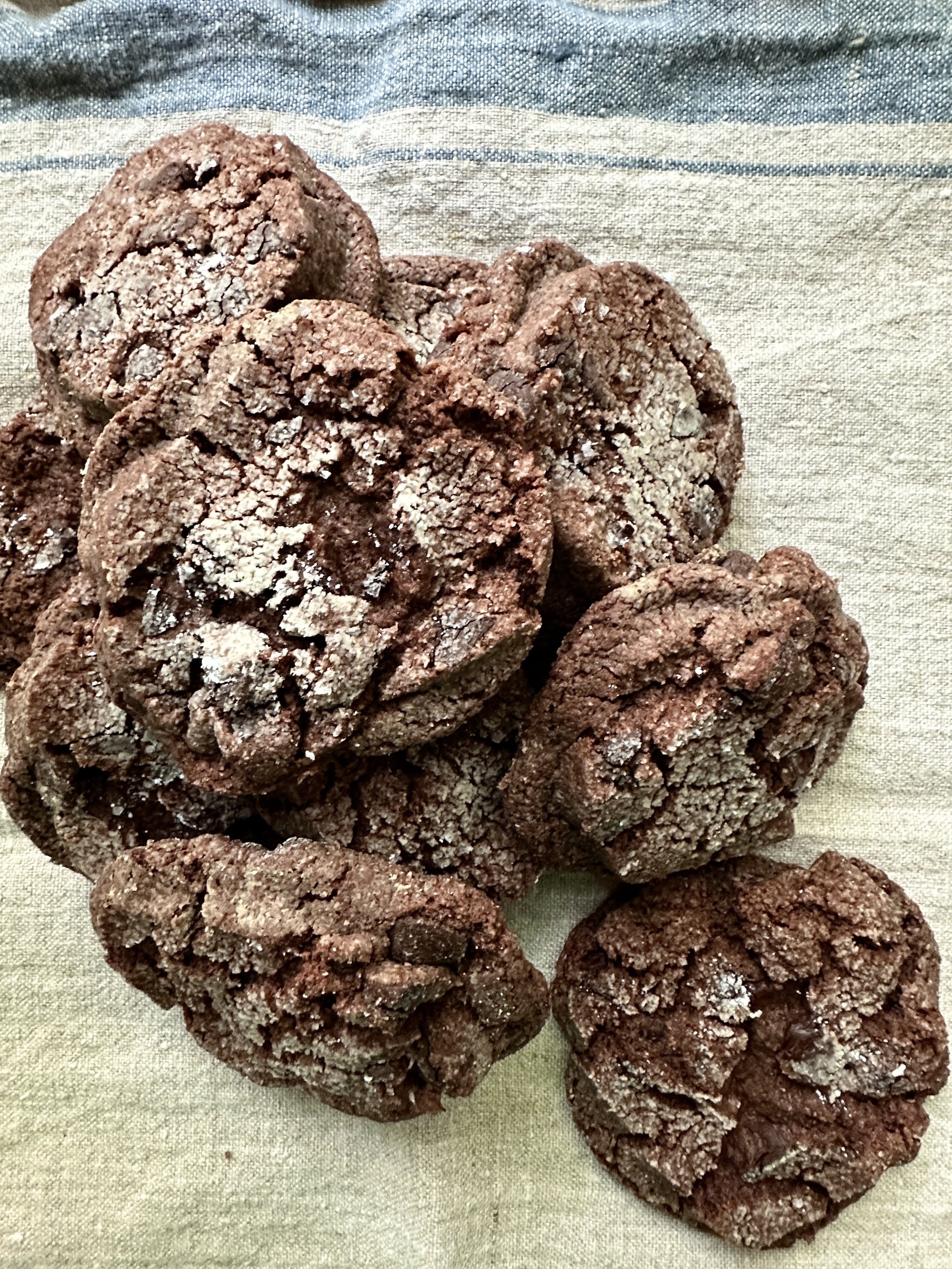
Some of these I will try to knit into the fabric of my own life, here. Similarly, I will take all the souvenirs from my travels and give them out as gifts, enjoy them, make something beautiful that’s a blending of cultures. In this case, it’s my favorite cookies from a local bakery, Bien Cuit, made with flour I bought from a stand at the farmer’s market in Vannes and stowed in my son’s suitcase after I ran out of space in my own.

Salted Chocolate Buckwheat Cookies

Makes 1 dozen or more

  • 2 cups (250 g) buckwheat flour

  • ⅓ cup (32 g) unsweetened cocoa powder (Dutch process)

  • 1 Tablespoon (12 g) baking powder

  • 1 ½ cups (300 g) light brown sugar, lightly packed

  • 2 sticks/1 cup (227 g) unsalted butter at room temperature

  • 1 ¼ cups (200 g) bittersweet chocolate chips

  • 1 teaspoon (5 g) strong espresso or coffee

  • Powdered sugar for finishing

  • Flaky sea salt (Maldon) for finishing

Note: This is a recipe from Bien Cuit, which also appears on Food 52’s website and Bon Appetit (paywall). These spread more, either due to differences in French flour not slicing the dough thickly enough, or some other unknown variable. That’s OK! They were still delicious and tender.

Positive distractions, and a recipe

If you’re waiting for spring in New York City, the month of March can feel like four years. To get through these chilly days, I’ve been distracting myself with wholesome winter videos of Montrealers’ antics in a recent snow dump, huskies refusing to come in from the cold, and old Warren Miller ski movies (absolute best voiceovers! Tonic for the soul! Second only to those of Sir David Attenborough). We will be choosing more snow for our spring break, so I think for now it’s best to just embrace it. 

Hints of spring: bright green shoots of tarragon and chives are emerging in our planter beds, reminding me of how resilient nature is and hinting toward a new season of produce and cooking. The sound of birdsong, even in this urban landscape, changes right about now and soon we’ll be hearing the squawking of red-winged blackbirds out back. 

Some things that are getting me through: 

Reasons to Be Cheerful is an independent publication and newsletter founded by musician David Byrne. I recently subscribed to this “weekly dose of dopamine for your inbox” as an antidote to the daily media avalanche, and I now receive positive news of the environmental, scientific, and human variety. 

In that vein, I also joined Front Porch Forum, a Vermont-only social network promoting “radical neighborliness” (it’s old school and kind of the anti-X). We’ve been spending more and more time in the Green Mountain state and I want to know more about what’s going on in the community. 

I’ve been fascinated by studies suggesting a beneficial link between hot chili peppers, microbiome diversity, and even ADHD mitigation. Maybe my craving for ultra spicy foods isn’t just thrill seeking, after all? Yay for science and research! And Ben for sharing this tidbit!

On the subject of food facts, did you know there’s a Museum of Food and Drink (MOFAD) in Brooklyn? It’s in DUMBO, above Time Out Market, and the current exhibit explores flavor. I’ve been volunteering as a docent at this small but mighty museum and love their message that food is culture and connects us all. The team behind MOFAD is pretty great, too.

If you’re in the Charlottesville, Virginia area, check out my sister Cassie’s art exhibit, “Liminal,” at Second Street Gallery, near the Downtown Mall. Her art is gorgeous and this excellent gallery always has something fresh on offer. 

The Philadelphia Flower Show is on at this writing, now through March 9. If you go there, immerse yourself in all things botanical, and say hi to my friend Kamila, who will be selling her beautiful art prints in maker’s booth M33 (if you’re nowhere near there you can still order her products online). 

Citrus always comes to the rescue this time of year, and I recently worked up this recipe inspired by a dessert I had at our local F&F Restaurant and Bar. It’s uncomplicated, bright and cheerful—all things we need right now. I love the play of tart citrus fruits against rich, lightly sweetened mascarpone. If you forgo the garnish there are just three ingredients. You can also check it out on my web site, along with other recipes I update seasonally. 

Recipe for pistachio-orange shortbread is on my site

Citrus & Mascarpone

Serves 4

Ingredients:

  • 6 citrus fruits, preferably a mix, for example: 1 large grapefruit, 3 oranges such as Cara Cara, plus 2 of “something else”, like blood orange and/or Meyer lemon.

  • 1 cup (8 oz.) mascarpone

  • 1 1/2 tablespoons granulated sugar

  • Optional: bittersweet chocolate or fresh mint leaves for garnish

Instructions:

  1. Stir the mascarpone and sugar together well, and set aside at room temperature. The mascarpone should loosen up as it becomes less cold.

  2. Section (suprême) each fruit: cut off the ends just until the fruit beneath is visible, then stand fruit on end and cut along the curve of the fruit, removing the rind and white pith entirely but leaving as much of the fruit possible. Repeat until you have removed all the rinds completely. Next, using a sharp knife, cut along the membranes that divide each section, toward the center of the fruit, until you have skin-free segments. (Though this takes a bit of work, it’s worth it since you’ll have more tender, flavor-intensive slices of fruit). Here’s a video.

  3. Arrange the citrus segments on plates topped with some of the mascarpone. Serve as-is or garnish with finely grated, bittersweet chocolate or a scattering of fresh mint leaves. I like to serve this with a cookie, such as pistaschio-orange shortbread.

Alentejo, by Cassie Guy

Lastly, if you are wondering how to help the must vulnerable members of your community right now, consider supporting your local mutual aid network, which you can locate using this resource. For local Brooklyn folks I absolutely love The Service Collective, which offers tons of kid-friendly volunteer opportunities, so the whole family can help out. Thank you, Marji, for setting up a recent fun project through TSC, assembling toiletry kits with our middle schoolers.

They're Here

Happy June! I’m fresh back from a week in Virginia, where a strange sound awakened me around 5:30 most mornings. The first day, my brain registered it as someone’s home alarm system going off incessantly in the distance. I cracked open the quarter pie window of my childhood bedroom, and the outside world was loud—filled with a high, ringing roar that kicked up with the first hints of light and pulsated in the background throughout the day. It’s everywhere, most days: in the trees, in your head, all around you. On beautiful, warm mornings after a nighttime rain, the ruckus sounds downright apocalyptic. In the evening, the din morphs into something like a bunch of lazy-sounding weed whackers whizzing up and down the street.

The sound, of course, is the chorus of Brood X cicadas emerging after 17 years underground, all of them trying to get it on before it’s all over for their red-eyed tribe for another 17 years. Everywhere there are ragged holes left in the dirt where the nymphs emerged. Their molted shells, the color of perfectly done fried chicken, adorn every climbable surface, and the adults in their new bodies stumble around unsure of what to do with themselves. Some don’t look quite right after subterranean phase; they weave around drunkenly or beat a hopeless circle on their backs. The air is filled with them, like tiny drones, and each time a squirrel scampers across a tree bough a flock is unleashed into the sky. The sidewalks are littered with a flotsam of wings (the birds, who are pretty psyched right now, apparently spit those out).

If you come upon one emerging from its shell, it’s an eerie and beautiful sight: a diaphanous creature with etched crystal wings and eyes like little rubies. This is the stage when you can capture and eat them, apparently—"tree shrimp,” according to this guide. Within minutes their exoskeletons have hardened and darkened.

Their numbers are astonishing. They’re especially thick around my favorite tree, a huge and magnificently twisty old Japanese maple whose branches were barely large enough to support me and my sister when we were little, and under whose boughs, as teens, we were made to pose awkwardly for a portrait photographer. At the time of that picture (which I hope Cassie and I destroyed all copies of), the generation that would become the 2004 emergers were biding their time silently beneath us.

In cities that are reopening right now—definitely in my neighborhood of Brooklyn—the human population is behaving much like those cicadas. People are flocking out of their homes and into the streets and parks and bars and outdoor restaurant terraces (definitely one of the upsides of covid times). We’re not all getting it right. Some of us are still a little disoriented and dazed, and some have emerged a little damaged from the long stint underground. Others—plenty—are spreading their wings and looking for action.

Are the Brood X cicadas another plague descending upon us? Or are they a symbol of hope and renewal and the tenacity of nature? I’m a Spring optimist these days, so I’m leaning heavily toward the latter view.

Check out this cool Washington Post interactive on the cicadas’ life cycle.

If you’re not into eating bugs, here are some other seasonal cooking ideas (with links to recipes):

Asparagus:

•Throw them in a hot skillet with some butter or olive oil, a little salt. Turn them to brown on all sides; you just need around 5 minutes (a little more if the spears are fat). When they are almost done, scatter a bunch of shredded parm over them and let it crisp at the edges a bit. Squeeze some lemon on and serve.

•Steam and top with ramp butter or miso butter.

•Rub with olive oil, salt and chili flakes and throw on the grill

Strawberries:

•Try this vintage recipe for strawberry shortcake made with one huge biscuit.

Buttermilk panna cotta with fresh strawberries

Strawberry-almond muffins

Pea Shoots:

•Wilt the sturdier ones with miso and Spring garlic

•Use the wispier pea tendrils in this salad with pecorino and almonds

Fig Leaves:

Yes you can use them! Especially the tender new ones. They have a very special flavor. Here’s how:

Wrap up fish like fresh sardines or branzino and grill.

•This fig leaf and honey ice cream from David Lebovitz will exceed your wildest expectations.

Green Tomatoes:

Fried green tomatoes are the best!

Pickle them

Greens, miscellaneous:

Savory greens and feta tart

•Add some green tops (radish, carrot) to basil in a pesto to stretch it out and eliminate food waste.

If you love farmer’s markets but can’t always catch them, check out Our Harvest for those in NYC, Long Island, and parts of Connecticut. 25% and free delivery off your first order (or use discount code SHALLOT at checkout)!

emerging

emerging

Citrus is Good Medicine

Happy 2021! My office is currently doubling as a (very loud) 2nd grade classroom. More broadly, the new year so far seems like a bad sequel to the weird movie that was 2020.

Zoom Life (James) by Kamila Zmrzla @topbunartist

Zoom Life (James) by Kamila Zmrzla @topbunartist

So let’s escape, for a moment, into all things citrus. It’s something I do in an ordinary January, but as this winter calls for an especially deep dive, I thought I would share some of my resources, ideas, and recipes for the juicy, puckery citrus fruits that are coming at us. In normal times my relationship with citrus has bordered on obsessive, as was revealed a few years back when I smuggled a dozen giant lemons and citrons back from Italy, only to narrowly wriggle my way out of a scrape with customs agents (ask my kids about this). The lemons made it home to my kitchen, but I don’t recommend making children your citrus mules.

citrus.jpg

First, if you’ve been underwhelmed by the citrus on offer at your local supermarket, here are some sources that bring fresh fruit to your door:

I recently discovered that Etsy—yes Etsy! is a treasure trove of fresh citrus fruits, shipped straight from someone’s sunny orchard in California or Florida. In fact, you can find all manner of exotic produce, seeds, and saplings—technically sold under “gifts”—on Etsy. 🤯 I recently ordered a box of pretty pink cara cara oranges from this shop and a box of blood oranges and unwaxed meyer lemons from here. It’s an interesting way to shop, since even with travel distance the supply chain is more direct.

As I was sitting down to begin this post, Mark Bittman’s newsletter slid into my emails. It’s devoted to all things citrus and he’s offering a box of mail order oranges, lemons, limes, etc. from California, along with some of his always excellent ideas and recipes.

Got a green thumb and a sunny window? You can order your own lil’ key lime, Meyer lemon, or Australian finger lime tree to keep you company (and bear fruit) through the winter months. Via Citrus and Four Winds Growers both ship to most states.

Frog Hollow Farm is also a solid source for great quality, seasonal citrus and other fruits.

Natoora, which aggregates produce from small growers, has many specialty varieties of citrus that you don’t see in stores available for delivery this time of year.

Recipe ideas:

Do you need a drink? If I had to pick just one cocktail, it would be the puckery and spicy tequila potion my sister Cassie regularly concocts, which has taken hold in my own household. Hey! We’re just warding off scurvy. The “recipe” is this: Squeeze together mixed varieties of citrus, serve the juice over ice with a splash of soda and as much tequila as you want or need. I don’t sweeten it, but you can put in a bit of agave, simple syrup, or sweetener of choice. Scatter in some jalapeño slices to spice it up. Taste and trust yourself!

I usually keep loads of lemons on hand, since a squeeze of the juice is a nifty way to bring up flavors and even reduce the amount of salt you need. One of our favorite weeknight dinners is a one-pan chicken with lemons, caperberries, and potatoes. Also on the savory side is this Citrus, fennel, and green olive salad. There’s plenty of sweet stuff on my site, too, including recipes for meyer lemon ginger curd, which is like silky sunshine spread on toasted croissants in the morning, and a lemon-quark snacking cake, which never sticks around very long after I make it. To satisfy a craving for both chocolate and citrus, try these Chocolate-Orange Pots de Crème—they are adult grade pudding cups.

Also, you should know about Andy Baraghani’s whole lemon-sesame sauce at Bon Appétit. It was the first thing I made with those contraband Amalfi Coast lemons, and it’s stellar with salmon.

Here’s a basic recipe for making preserved lemons, which are an essential pantry item in this house. I’m fond of slicing them very thinly (you eat them rind and all) and laying them atop sardines on toast, and I also make a tahini sauce that’s loaded up with preserved lemons and a little garlic.

This Blood Orange Bundt Cake with Bitters, from Eyeswoon, is truly magical. If you’re looking for a vegan version there’s a gorgeous one over on Fare Isle.

If you’re still here I’m sharing a totally unrelated link for this extraordinary story by Ann Patchett that has really stuck with me since a friend forwarded it along. It speaks of human connection and the mysteries of life, and yes the silver linings of Covid. It’s a lengthy one, so grab a slice of lemon cake or a tequila-citrus cocktail and find a comfortable spot.


Ice Cream

One of the things I miss the most about our old life, the one before coronavirus, is going out for ice cream on the first warm days of spring. We are—were—fortunate to have two wonderful options within a couple of blocks of our house. The first, MilkMade, closed last fall, and I miss the little storefront with the pepto-colored trim and the innovative flavors like Haunted Hayride, Mango sticky rice, and Key Lime Pie (my favorite). All the ice creams were spun right there in the back, and on a hot summer night a tight queue of happy, sweaty families stretched halfway around the block. Remember tight queues?

Right across the street from the former MilkMade is Farmacy, which is temporarily closed. When we first moved to this neighborhood the space was a creepy, abandoned drugstore whose windows we used to peer through, speculating on what the story was there. It was littered with dust bunnies and weathered pharmaceutical products someone had just walked away from one day and never looked back. Luckily, some fine folks rescued and turned it into an old-fashioned soda fountain, its tiled floors and old pill cabinets beautifully preserved, a countertop with swivel stools where you can perch and watch the soda jerks work their magic with the shiny chrome equipment. We would pop in with the kids to get one of their creative sodas or sundaes, like the Pink Poodle or Sir Twix-a-Lot. We grownups liked to drown our afternoon slump in an affogato. I hope those days will be back soon.  

This weekend, the time was right for some ice cream, so I got my clunky old ice cream maker down. It’s heavy and it takes up too much cabinet real estate, but it has its own compressor so you don’t have to freeze a canister and if you really wanted to you could spin quart after quart, all day long. For our 2020 inaugural run I used up some mangos that were wrinkling in the fruit bowl. Those smaller, sweeter yellow mangoes called Ataulfo or Champagne mangos seem to be plentiful in the markets right now, and we had gotten a deal on a case of them. After the kids tired of having mango “hedgehogs” for breakfast I had to find a way to use the rest.

Wrinkly, flavorful Ataulfo mangoes

Wrinkly, flavorful Ataulfo mangoes

I developed a vegan mango ice cream with a slight hint of cardamom since I love that flavor and happen to have a fresh batch of cardamom. It gets its creaminess from coconut milk (I used the canned, unsweetened organic kind. You can get it without guar gum if that bothers you). A note on sugar and sweetening: the amount I specify in this recipe is low. That is because our mangos were super ripe and sweet, and I have been trying to go light on sugar in general. I would advise tasting your blend and deciding what works—and you can also experiment with alternative sweeteners like coconut sugar.  It’s so good! My family voted thumbs up and my daughter Cece said I should definitely put the recipe up here. Note: If you don’t have a machine I’ve included an alternative freezing method. Won’t be 100% the same but still delicious. You can also check out my all time favorite ice cream recipe, fresh mint leaf/chocolate chip, here or at its old blog home here.

Vegan mango cardamom ice cream

Vegan mango cardamom ice cream

Vegan Mango Cardamom Ice “Cream”

Ingredients:

  • 3 lbs very ripe whole mangos, preferably the smaller yellow Ataulfo aka Champagne mangos (around 5 of them)

  • 1/4 cup sugar — more or less to taste

  • juice of 1/2 lime

  • 1/4 tsp. ground cardamom

  • pinch salt

  • 1 cup unsweetened coconut milk

Instructions:

  1. Slice mango away from the pit on each side. Scoop the fruit out of the skins. Cut all the mango fruit you possibly can away from the pit, avoiding the hairy fibrous part close to the pit. Repeat this with all the mangos, discarding skins and pits.

  2. Put mango and all other ingredients in a blender and blend thoroughly until super smooth. Taste and add more sugar if needed—all mangos are different so sweeten accordingly! Chill mixture until quite cold.

  3. Freeze according to your ice cream maker’s instructions. If you don’t have an ice cream maker, freeze in a shallow container, going in every 20 minutes or so to stir and scrape with a fork, outer edges to center, until you’ve reached the consistency you like.

JuJu's Tea Cakes

(Originally Published here December 9, 2011)

I’d been working on a post about Brussels sprouts, when all of a sudden I woke up one morning and Wham! was on the radio singing “Last Christmas”, and the tree people had come down from Vermont to re-forest the corner of Kane & Clinton. This means, by necessity, that letters for Santa have been painstakingly scrawled in childish hand, and Good Curious Elf has begun his nightly patrols. We’ve already been swept into the whirlwind of the Christmas Spectacular and tree viewing at Rockefeller Center, and we've handed the tots off to the grandparents for the more onerous Manhattan errands. So suddenly, shredded Brussels sprouts with lemon and cappellini, as much as I love that dish, seems colossally un-special. It’s time for some baking, and I’d like to share a cookie recipe that, for us, always kick-starts the holiday season. It’s not the most original one you’ll see in this year’s cookie line-up, but it was my great-grandmother’s. That sounds even more impressive when I tell my daughters we are baking their great-great grandmother’s cookies, the ones my mom used to make with my sister and me every December.

Mrs. Julia Butterworth, known as “JuJu,” lived in the tiny town of DeWitt, VA. This is not the first time I’ve written about her here. Since she reached the venerable age of 96 I got to know her for a handful of years, but those being my youngest years I only caught her in glimpses, which at this point in my life have gotten muddled together in a grainy black-and-white montage. I imagine her with a nimbus of snow-white hair and old-fashioned eyeglasses, slimly built and simply dressed, with a sweet, old-lady smile. I suppose, now, I know her more from Mom’s stories than anything else and can almost feel the feeling of climbing in between cold sheets in her guest bedroom, peering out at the dark shadows that gathered in the corners of her old farmhouse. I can hear the birds chirp in the morning as I imagine stealing into her garden to pull sweet young turnips from the dirt, warm underfoot in the Virginia sun.

And so, following her recipe for “tea cakes,” rolling out the buttery dough and pressing down onto the cookie cutters and snapping a crisp cookie between my teeth, I almost believe I can visit with her for a while and bring my daughters along to meet her. They don’t yet appreciate time passed and memories preserved as I do, but they adore a good tea cake and beg for them year round. We’ve been known to pull out this recipe at Halloween or Valentine’s Day, too, merely as an excuse to wield cookie cutters.

There’s nothing especially elaborate or new about this recipe, it’s just a good, solid one for this old-fashioned type of cookie, which inhabits the space somewhere between a butter cookie and a sugar cookie. In spite of what the name might suggest, there’s nothing cake-y about them–especially when rolled thin as we’re in the habit of doing in my family. Juju had two different versions: the “everyday” ones baked with Fluffo instead of butter and cut thicker in the shapes of bunnies, with raisins for eyes…and then the fancy “tea cake” rendition for special occasions: made with real butter, rolled thin, cut in a variety of shapes, and decorated prettily with sprinkles. That’s the kind my mother made with us at Christmas. It was part of her slim repertoire of sweet treats, and in fact the only thing we ever baked during the holiday season. But she was a decent baker and had her opinions about how things should be done. The dough had to be stretched whisper-thin and lightly adorned, preferably with 4mm silver dragees. My sister and I used to torture her by loading on the colored sugar, as much as a cookie could physically hold, as soon as she turned her head…and gleefully watched her horror when she turned back around to discover our handiwork. As I make these cookies with my daughters every year, I catch myself falling into the same OCD patterns, tensing up as they pile on the crystallized red dye #5. But I hold myself back, letting them unleash their little creative demons.

Around here, it’s not Christmas until a round of these cookies gets made, and flour dusts the whole kitchen, and the house fills with their buttery-sweet smell. I do roll them wafer thin, a habit which demands a little more work and watchfulness (they burn in a flash). My preference is for cookies that are golden and a little toasty around the edges, with a hint of caramelized flavor. I am also partial to the glittering dragees, even though I’m not quite sure what sort of metals we’re ingesting (note: I prefer the 2mm size to the 4mm; they’re more like birdshot than BBs and much gentler on the teeth).

Truly, the best thing about these cookies always was–and still is–the raw dough. Rich and vanilla-scented, with a sugary crunch between the teeth, it is the very essence of what cookie dough should be, and there is no better anywhere. I still gobble up the scraps as I roll and cut. Mom used to give us each a beater off her 1968 hand mixer–the one she still owns in spite of the gaping hole in its casing and exposed wiring and gears within (“I keep things until they die,” she'll proudly tell you). We would strip off every atom of dough with our tongues and stick our heads into the empty mixing bowl for good measure, until somewhere along the line there was a salmonella scare, and a dough-laden beater acquired the same, suburban menace as a raccoon out in daylight or unwrapped candy on Halloween. It became every parent’s responsibility to keep cookie dough away from children’s mouths, and so Mom fell in line. Still, we managed to swipe our fingers in the dough bowl while she wasn’t looking and later, growing bolder, to steal down to the refrigerator where the dough rested, peel back the plastic wrap and break off hunks of chilled dough, which was even better, somehow, than it had been at the freshly-whipped stage. After she got wise to our ways and threatened to cut us off from Christmas sweets forever, our deceptions grew more intricate, and we honed the art of opening the fridge swiftly with a well-timed cough to mask the sound, and with a potter’s skill, of molding the dough back into place after prying off a sugary chunk.

Enjoy this recipe any way you like: pressed thin, left thick, modestly or garishly sprinkled, iced, pale, tawny at the edges, or burnt to a crisp. Enjoy the meditation of flouring the board and rolling out the dough. And if you happen to be making these with kids, savor the way you're forced to slow down a bit during the holiday season. Let go of your control freak side for a moment and make a terrible, floury, sprinkly mess.

Recipe: Juju’s Tea Cakes  

Ingredients:  

  • 2 sticks butter (8 oz.), softened at room temperature 

  • 1 ½ cups sugar (the natural kind works if it’s finely textured)  

  • 2 large eggs (or one Jumbo)  

  • 2 ½ cups all-purpose flour plus extra for flouring cookie surface  

  • 1 tsp. good-quality vanilla extract  

  • 1 tsp. baking powder

Instructions:  

With an electric mixer, cream together butter and sugar until light and fluffy. Add eggs and vanilla and beat until combined. Sift dry ingredients together into a separate bowl, then add to the butter mixture in two additions. Mix until just combined. Scrape out of bowl and shape roughly into four disks, wrapping in plastic wrap or parchment. Chill for at least an hour, or overnight, until firm.

When ready to make cookies, preheat oven to 350º. Leave dough out at room temperature for 20 minutes or so, until softened and workable but still cold and somewhat firm. Prepare trays with either parchment or silpat. Ready a clean surface and rolling pin, along with some extra flour for dusting. Lightly dust your work surface and rolling pin and roll out cookie dough, working from the center outward and rotating the disk for the most even thickness. When you’ve reached about between 1/8" and 1/16” thickness (or as desired), cut out your cookies with floured cutters of your choice. Transfer to prepared cookie sheets (a dough scraper really helps) and decorate as desired. 

Bake, checking frequently, between 15 and 25 minutes. Ovens vary widely, and much depends on how thinly you've rolled your dough. When done to your liking (I like them golden around the edges), remove tray from oven and cool cookies before handling. They keep in an airtight container for a couple of weeks.
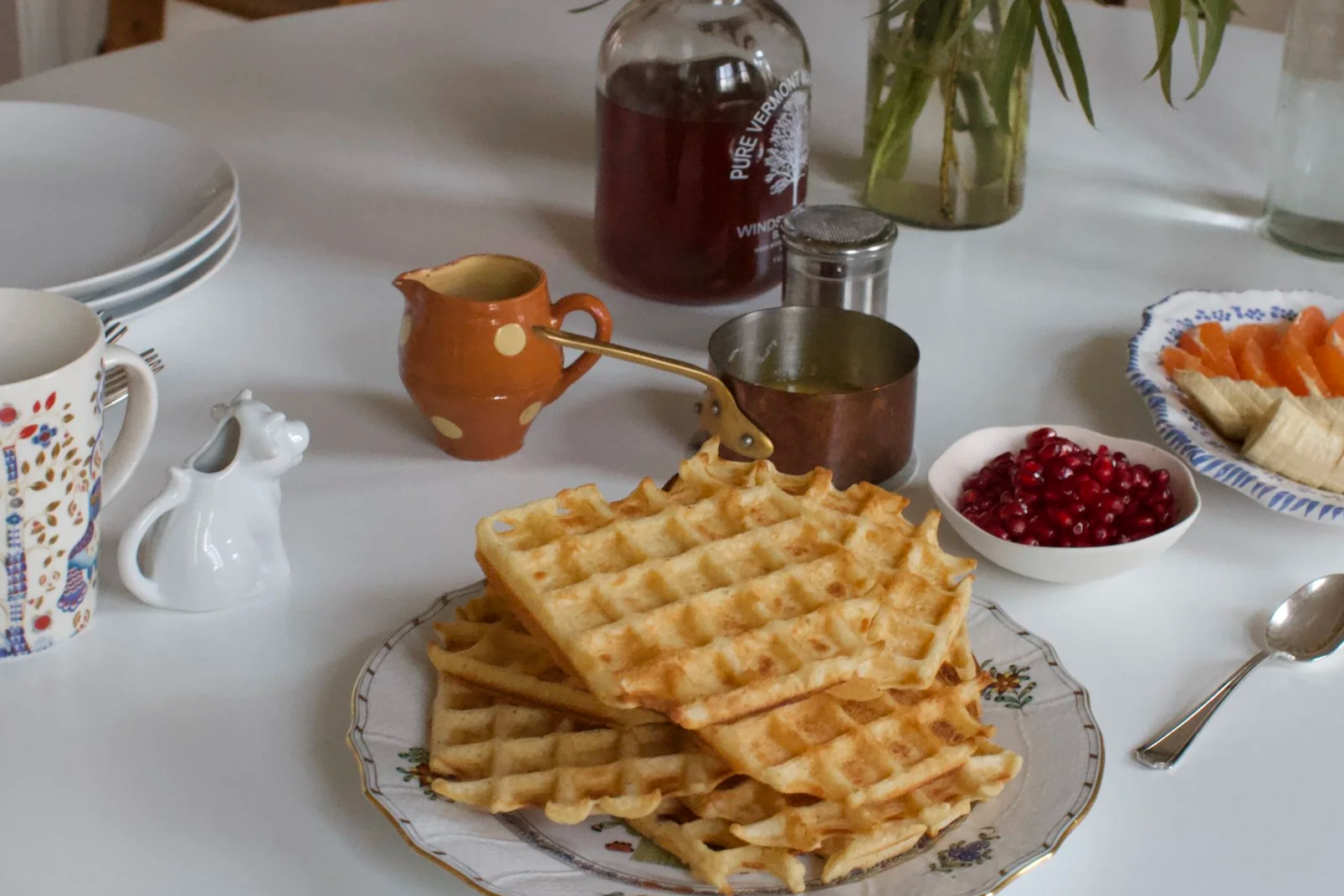
Christmas Cookies.jpg